H-Mart vs. Patel Brothers: Which Aisle Actually Pays You Back

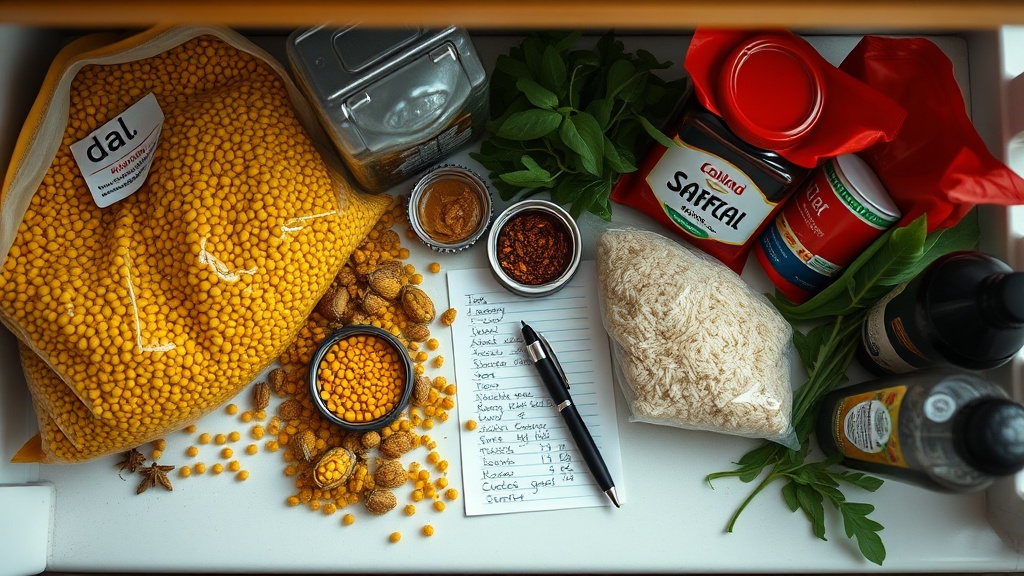
Nowruz is in two weeks, and I'm already rotating my pantry. Every spring I do the same thing: pull everything out, smell it, throw out whatever smells like cardboard, and then rebuild. (If you're also prepping, I've already written out the Persian pantry haul for Nowruz—this pairs with that.) And every year I go through the same internal argument while standing in two different grocery stores 45 minutes apart.
H-Mart. Patel Brothers. Which one is actually worth the trip?
After four years of keeping a running price log in a notes app my phone threatens to delete every time I update it, I have opinions. Measured, sourced, annotated opinions.
The Price Gap Isn't Random
What researchers don't tell you: price differences at international grocery stores aren't arbitrary. They follow patterns. Once you see them, you can't unsee them.
Take cardamom. At H-Mart in Queens, a 3.5oz jar of green cardamom pods consistently runs higher than the equivalent weight at Patel Brothers — in my experience, often by 30-50% on a given week. But look closer and the origins tend to diverge. H-Mart sources cardamom through East/Southeast Asian supply chains, and often carries Guatemalan origin (Guatemala is now a major global producer). Patel's sources more directly from South Asian importers, often Kerala or Sri Lanka origin.
Does it taste different? Yes, actually. Indian cardamom is more intensely eucalyptus-forward with sharper volatile oil content. Guatemalan tends slightly sweeter, more subtly floral. Neither is inferior. They're different ingredients with different best uses.
The price differential reflects the supply chain, not the quality tier. Patel's has a more direct South Asian import pipeline. H-Mart is sourcing through networks optimized for East and Southeast Asian goods; South Asian spices are secondary freight, and that shows up in markup.
This is the price gap illusion in action: the difference isn't about one store being "cheaper." It's about whose supply chain the ingredient belongs to.
What Lower Grade Actually Does to a Dish
I need to say something unpopular: spice quality grades matter more than most people admit, and less than spice companies want you to believe.
Saffron is the clearest case study. Persian saffron — which Patel's sources more consistently and often carries in bulk during pre-Nowruz season — comes in three commercial grades. Grade 1 (all-red stigmas, no yellow style) has the highest safranal and crocin content. Grade 3 (mixed cut with yellow style) is cheaper and significantly lower in both pigment and aroma compound concentration.
At H-Mart, saffron is less consistently stocked, tends toward mid-grade, and origin labeling is often vague. The price can look competitive until you account for the fact that you need meaningfully more of it to achieve the same color and flavor depth in, say, a tahdig or a rice pilaf.
The Two-Burner Truth: when you're cooking on limited equipment in a small kitchen, you need your ingredients to work harder. A grade-three saffron in a small apartment kitchen where you can't throw extra heat at things to compensate? You'll taste the compromise. (I've written about this two-burner constraint before—and it changes everything about sourcing.) Spring pantry reset is the right time to upgrade the things that carry actual flavor work — and to be ruthless about what's been sitting since October.
But here's the counter-point: for base spices in a complex blend — ground cumin in a mole, coriander in a curry paste — the grade difference gets buried under layered technique. Save your sourcing energy for ingredients that perform solo.
The Sourcing Map (Honest Version)
I've been doing this long enough to have a rough mental map. Let me write it out so I don't have to keep explaining it to people in my DMs.
Go to Patel Brothers for:
- Whole spices in large format (cardamom, cloves, black pepper, mustard seeds — the price per gram difference is significant)
- Dals and pulses (toor, chana, urad — the variety and freshness beat H-Mart's limited South Asian section)
- Atta and besan flours (far cheaper, better selection, usually fresher stock rotation)
- Fresh methi, curry leaves, and South Asian produce when in season
- Tamarind paste and block (the real ones, not the thin jarred stuff)
- Persian saffron, especially pre-holiday season (November-March window)
- Ghee in large quantities (the price-per-ounce gap is embarrassing)
Go to H-Mart for:
- Gochugaru and gochujang (full tier range, authentic Korean origin)
- Doubanjiang, black bean paste, chili crisp in serious variety
- Japanese pantry staples: mirin, sake, miso varieties, dashi packs
- Tofu in every texture and form factor
- Kimchi made in-house or from local Korean producers
- Fresh produce optimized for East/Southeast Asian cooking (perilla, chrysanthemum greens, bitter melon, Korean chives)
- Rice in bulk (Japanese short-grain, jasmine, sticky varieties — better selection than Patel's for these origins)
- Sesame oils and roasted sesame seeds (the Korean cold-pressed ones specifically)
- Chinese black vinegar: Zhenjiang brand, consistent stock
The crossover category where you have to make judgment calls:
- Dried mushrooms (shiitake: H-Mart wins; whole dried porcini: neither, go Italian import)
- Fish sauce (Patel's occasionally stocks good Vietnamese brands but inconsistently; H-Mart more reliable)
- Chili pastes in general (depends heavily on the dish's regional origin)
The 3-Store Rotation (This Is the Real Strategy)
I've tried doing everything in one store. It doesn't work. The economics don't work, the selection doesn't work, and honestly? I've accepted that building a real global pantry means accepting that no single store is optimized for all of it.
My current rotation:
H-Mart (bi-weekly, Tuesday mornings before it gets crowded): Korean and Japanese pantry staples, fresh produce top-up, tofu, rice, kimchi. I've mapped out the actual savings strategy here. Budget: $40-60.
Patel Brothers (once a month, first weekend): Big spice restocks, dal and flour, ghee, tamarind. I buy quantity here because the price differential on bulk formats justifies it. Budget: $35-55, but lasts 4-6 weeks on staples.
The Wildcard — and you need one: Mine is a Dominican bodega on my block for plantains and culantro (not cilantro — culantro, the serrated one, the one with actual longevity as a cooked herb). Occasionally a small Armenian market when I need Aleppo pepper that isn't over-dried or the right dried figs for a Persian stew. The wildcard changes. The point is: there's always an ingredient class that neither anchor store handles well, and the neighborhood usually has something.
If you're in a different city: substitute your Korean supermarket for H-Mart, your South Asian grocery for Patel's, and find your wildcard. The principle holds regardless of geography.
The Seasonal Timing Hack Nobody Talks About
Buying patterns matter almost as much as where you buy.
Pre-Nowruz (right now, through March 20): Patel Brothers stocks hard on Persian pantry inventory — saffron, dried limes (loomi), barberries, fenugreek seeds. Buy now while shelves are fresh and full. After the holiday, specialty stock can get picked over and may sit until next year's cycle.
Post-Lunar New Year (February): H-Mart clears specialty packaged goods — gift box formats of sesame oils, rice cakes, premium noodle sets. The food inside is the same; the packaging isn't holiday-optimized anymore. This is when I buy better-quality sesame oil than I'd normally budget for.
Fall (September-October): Both stores run heavy fall root vegetable stock. This is when I buy dried chilis in bulk because they're being restocked for fall cooking season and turnover is high, meaning fresher product.
January: Patel Brothers specifically sees South Asian spice restocks ahead of the spring cooking season. New-crop cardamom and turmeric tend to arrive. If you can train yourself to think about ingredient freshness the way you think about produce seasonality, your cooking changes.
The Actual Answer
Neither store wins outright. That's the honest answer.
H-Mart is my East Asian and Korean pantry headquarters. Patel Brothers is my South Asian and pantry-staples headquarters. The 3-store rotation with a neighborhood wildcard is not some elaborate chef's optimization; it's just what cooking from a real global pantry requires when you're working with a budget and a two-burner stove.
The goal isn't to minimize trips. The goal is to stop paying markup on things you could source better, and to start understanding why the prices differ so you can make the call deliberately instead of just grabbing the cheapest label.
My actual spring pantry reset checklist for the next two weeks: restock whole cardamom and black cardamom at Patel's before Nowruz clears the good stock, pick up fresh gochugaru and doubanjiang at H-Mart, and find out if the Armenian market two neighborhoods over has gotten in the dried tart cherries I want for a lamb dish I've been planning since February.
That's the ethnographic field research continuing to generate data, one receipt at a time.
Sloane Katz writes from a walk-up in Queens where the counter space is aggressively managed and the spice drawer is better organized than her filing cabinet.