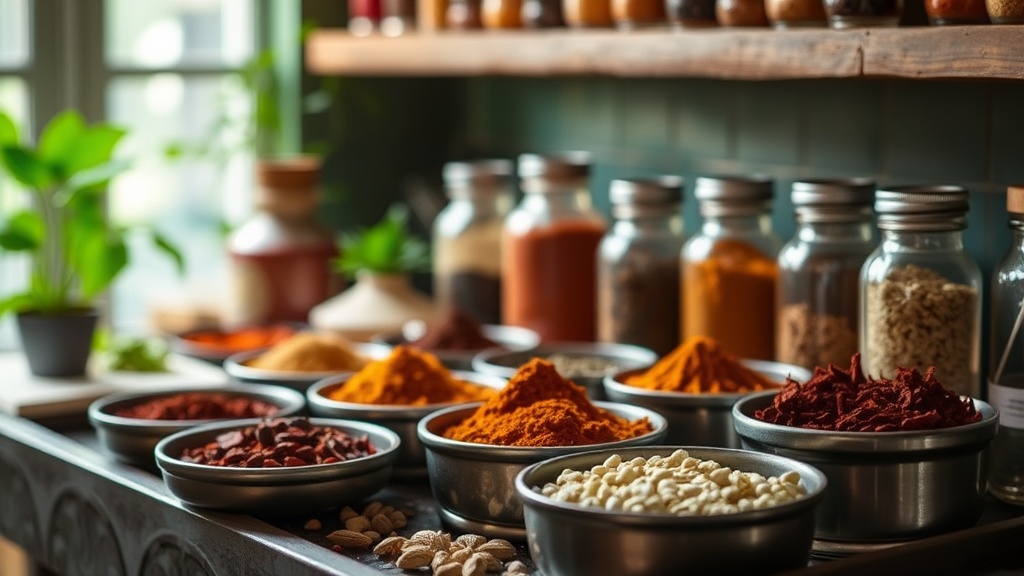
How to Build a Global Spice Pantry That Transforms Everyday Cooking

This guide covers exactly how to build a global spice pantry from scratch—what to buy, where to source it, how to keep it fresh, and how to use it without falling into the "collect 50 jars and forget half of them" trap. Whether you're trying to cook more Indian curries, Mexican moles, or Middle Eastern rice dishes, the right spices at your fingertips will change how your kitchen operates. You'll spend less time guessing and more time building actual flavor.
What Spices Do You Need to Cook Globally at Home?
You need about fifteen to twenty core spices to cover most of the world's major cuisines. Start with cumin (both whole seeds and ground), coriander, turmeric, smoked paprika, cayenne pepper, cinnamon sticks, whole cloves, cardamom pods, bay leaves, black peppercorns, dried oregano, thyme, ginger powder, and nutmeg. These form the backbone of Indian, Mexican, Mediterranean, Middle Eastern, and North African cooking. From there, you can add specialty items—sumac, star anise, saffron, fenugreek, annatto—as your cooking expands.
Here's the thing: you don't need to buy everything at once. Dex Thompson at globalflavors.blog always recommends starting with the cuisines you actually cook twice a month. If that's tacos and dal, prioritize cumin, oregano, chipotle powder, turmeric, and garam masala. (Garam masala itself is a blend, but many home cooks treat it as a single spice—totally fair.) Build outward from real habits, not fantasy menus.
That said, quality matters more than quantity. A stale jar of cumin from 2019 will make even the freshest tomatoes taste flat. For reliable quality, order from Penzeys Spices or visit The Spice House online. Both companies date their stock and ship fast. Dex Thompson, based in Richmond, has found that buying from high-turnover sources matters more than buying local.
Worth noting: ground spices lose potency in about six months. Whole spices last closer to two years. If you're buying turmeric or paprika pre-ground, get smaller jars. The McCormick bottles at the supermarket are convenient, but they're often already six months old by the time they hit the shelf. Buy from sources with high turnover.
How Should You Store Spices for Maximum Freshness?
Store spices in airtight containers away from heat, light, and moisture—ideally in a drawer or a closed cabinet, not on a rack above the stove. Heat and humidity are the fastest ways to destroy volatile oils, which means your spices will smell like dust instead of anything worth eating. Glass jars with tight lids work better than plastic bags. If you can find amber or cobalt glass, even better—it blocks light.
The catch? Most people store spices wrong because it looks nice. Those magnetic racks on the refrigerator or wooden shelves above the range are kitchen décor, not preservation systems. (Yes, they're Instagram-friendly. No, they won't keep your cardamom fresh.) If you want display-worthy storage, use a drawer insert with labeled lids facing up. You get the visual organization without the oxidation.
Label everything with the purchase date. Not the "best by" date from the manufacturer—the date you opened it. Masking tape and a Sharpie are enough. When in doubt, smell. If cumin doesn't smell like an earthy, slightly bitter perfume, it's done. The FDA guidelines on spice safety and storage recommend keeping dried herbs and spices in cool, dry places to prevent mold and maintain flavor integrity.
For whole spices like cinnamon sticks, cloves, and peppercorns, a small mortar and pestle—or an inexpensive coffee grinder reserved only for spices—lets you grind as needed. That one habit alone will double the flavor in your cooking. Pre-ground black pepper is fine in a pinch. Freshly cracked Tellicherry peppercorns from a grinder? Entirely different experience.
Which Spices Define the World's Major Cuisines?
Each major cuisine leans on a specific flavor profile built from a handful of signature spices. Indian cooking relies heavily on cumin, coriander, turmeric, cardamom, and mustard seeds. Mexican cuisine centers on dried chiles, cumin, Mexican oregano, and cinnamon. Middle Eastern dishes feature sumac, allspice, cinnamon, and cardamom. North African cooking—think Moroccan tagines—uses cumin, coriander, cinnamon, ginger, and saffron. Southeast Asian curries depend on turmeric, galangal, lemongrass, and coriander.
Here's a practical breakdown of which spices to prioritize by cuisine:
| Cuisine | Must-Have Spices | Nice-to-Have Spices |
|---|---|---|
| Indian | Cumin, coriander, turmeric, cardamom, mustard seeds | Fenugreek, asafoetida, nigella seeds |
| Mexican | Cumin, ancho chile, chipotle, Mexican oregano, cinnamon | Epazote, achiote, cloves |
| Middle Eastern | Sumac, allspice, cumin, cinnamon, cardamom | Za'atar blend, baharat, dried rose |
| North African | Cumin, coriander, ginger, cinnamon, paprika | Saffron, ras el hanout, harissa |
| Southeast Asian | Turmeric, coriander, black pepper, lemongrass | Galangal, kaffir lime leaves, shrimp paste |
That said, don't treat this as a rigid checklist. A good pinch of smoked paprika can work in a Middle Eastern lamb dish. Coriander seeds show up in Mexican salsa and Indian chutney. The boundaries are flexible—spices travel, and cooks adapt.
If you're looking for hard-to-find items like Persian saffron or Syrian aleppo pepper, Kalustyan's in New York City ships nationwide. For more common staples, Whole Foods 365 brand or Morton & Bassett offer consistent quality without the premium price tag of boutique suppliers.
What's the Best Way to Build Your Pantry Without Waste?
The best approach is to buy spices in small quantities, cook from them immediately, and restock only what you actually use up. A global pantry built overnight usually becomes a graveyard of dusty jars. Instead, pick one new cuisine per month. Buy four or five spices for that cuisine. Cook three or four dishes. By the end of the month, you'll know whether you love that flavor profile—or whether that jar of sumac is going to sit untouched.
Here's the thing: bulk bins are your friend. Stores like Whole Foods and local co-ops let you buy exactly two tablespoons of a spice for under a dollar. That's perfect for testing something exotic before committing to a full jar. (Just bring your own small containers or bags—some bulk sections are picky about packaging.)
Worth noting: blends can be a shortcut or a crutch. A quality garam masala or za'atar saves time. But if a blend is your only exposure to a cuisine, you'll never learn how the individual spices interact. Buy whole spices and toast them yourself at least a few times. The aroma alone is worth the extra two minutes. Once you understand the building blocks, blends become genuinely useful rather than mysterious.
For budget planning, expect to spend around $60 to $80 to build a solid starter pantry, then $10 to $15 per month to maintain and expand it. That's less than the cost of one mediocre takeout order. The catch? You have to actually cook. A pantry doesn't transform dinner on its own—you do.
How Do Whole Spices Compare to Ground in Everyday Cooking?
Whole spices deliver stronger, more complex flavor than pre-ground versions, but they require an extra step. For most home cooks, the practical split is simple: buy whole spices when the cooking time is long enough to extract flavor (simmering stews, rice pilafs, braises) and buy ground spices for quick dishes where speed matters (stir-fries, scrambled eggs, weeknight pan sauces). Cumin seeds toasted in oil release an almost nutty depth that ground cumin can't quite match. But ground cumin is perfect for a five-minute taco seasoning.
The real advantage of whole spices is shelf life. A cinnamon stick stays potent for two years. Ground cinnamon? Maybe six months. Whole black peppercorns keep their heat indefinitely if stored well. Pre-ground pepper tastes like cardboard within a year. If you're serious about building a global pantry, invest in a $15 blade-style coffee grinder—Krups and Cuisinart both make solid models—and keep it for spices only. Grind small batches every few weeks.
Some spices—turmeric, ginger powder, cayenne—are almost always used ground because they're roots or chiles that are dried and pulverized at the source. You won't find whole turmeric in most home kitchens, and that's fine. For these, just buy smaller amounts more often. Order from a source with high turnover like Oaktown Spice Shop or Penzeys, and restock quarterly instead of annually.
Here's a quick reference for what to buy whole versus ground:
- Buy whole: Cumin, coriander, cinnamon, cloves, cardamom, black pepper, nutmeg, allspice, star anise, fennel seeds.
- Buy ground: Turmeric, ginger, cayenne, paprika, chili powder, cinnamon (for baking), sumac, garlic powder, onion powder.
- Either works: Cumin, coriander, cinnamon—seriously, these three are so versatile that having both forms pays off.
That said, there's no shame in using ground spices when time is short. A Tuesday night dinner with ground coriander beats takeout every time. The goal isn't perfection—it's building a pantry that gets used.
How Do You Actually Use a Global Spice Pantry in Daily Meals?
You use it by adding spices early in the cooking process and layering them throughout. For most savory dishes, that means toasting whole spices in fat first—oil, ghee, or butter—to bloom their flavor. Then you add ground spices to the aromatics (onions, garlic, ginger) so they cook into the base rather than sitting on top of the finished dish. Raw turmeric or paprika sprinkled over chicken at the end will taste harsh. The same spice cooked into the sauce for fifteen minutes tastes round and complete.
Keep a small notebook or phone note tracking what works. "Too much clove in the lentils" or "cardamom + tomato = excellent"—these notes become your personal reference. Dex Thompson has been keeping spice notes for years at globalflavors.blog, and the patterns that emerge are surprisingly simple. Most great dishes come from three to four spices working together, not twenty.
Your pantry is a tool. Stock it well, store it right, and cook from it often. The transformation happens one meal at a time.