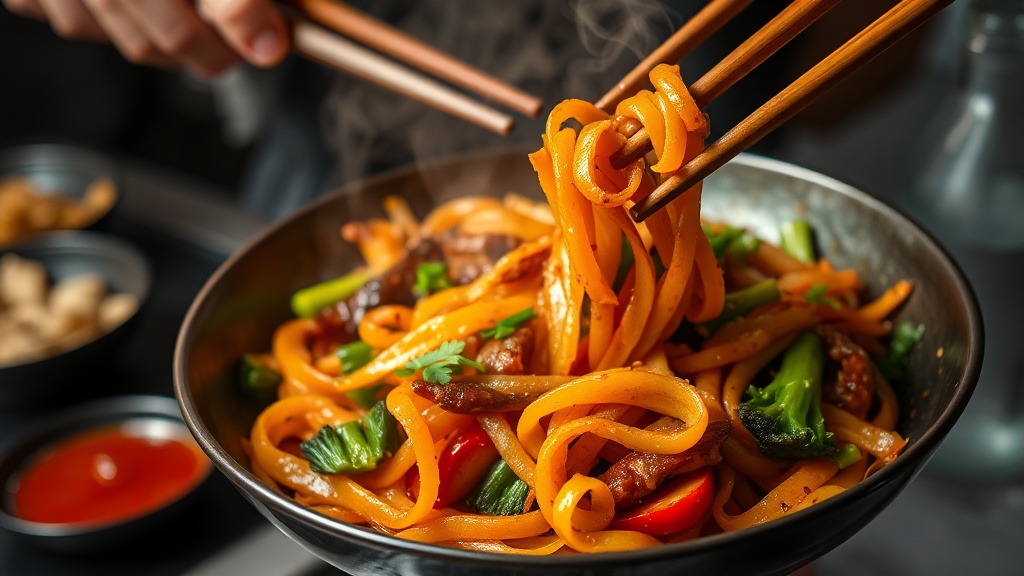
How to Make Restaurant-Quality Stir-Fry at Home

Restaurant-quality stir-fry isn't about secret sauces or expensive equipment—it's about understanding heat, timing, and a few technique shifts that transform limp vegetables and overcooked protein into smoky, crisp-tender dishes. This guide breaks down exactly how to replicate that wok-hei flavor and texture in a home kitchen, whether you're working with a backyard propane burner or a standard electric stove. You'll learn which pans actually matter, why ingredient order isn't negotiable, how to keep broccoli snappy instead of soggy, and the simple prep steps that separate amateur stir-fry from the kind you'd pay twenty dollars for in a bustling Richmond night market.
Why Does Restaurant Stir-Fry Taste Better Than Homemade?
The short answer is heat—serious heat. Commercial wok stations output 100,000 to 150,000 BTUs, which creates "wok hei" (literally "breath of the wok"), that elusive smoky char you can't fake with a gentle sauté. At home, most burners max out around 7,000 to 12,000 BTUs. The catch? You can compensate with the right pan, better prep, and smarter batching.
Restaurants also pre-cook almost everything. Proteins get velveted and par-cooked; sauces are mixed ahead of time; vegetables are cut to uniform sizes so they finish simultaneously. (Serious Eats breaks down the thermodynamics of wok cooking in detail.) Home cooks often dump everything into one pan at once, which drops the temperature and steams the food instead of searing it. The result is a watery, grey mess rather than the caramelized edges and fresh crunch that define great stir-fry.
There's also the matter of ingredient dryness. Professional kitchens use blast chillers, open-air refrigeration, and exhaust fans that pull moisture out of prepped vegetables. Your home refrigerator, by contrast, is a humid environment. That extra water on the surface of your bell peppers and mushrooms becomes steam the second it hits metal. Fighting that humidity—with thorough drying, smaller batches, and hotter pans—is half the battle.
What Pan Should You Use for Stir-Fry?
A carbon steel wok is the gold standard. It heats quickly, develops a natural nonstick patina, and has sloped sides that let you toss food into cooler zones while keeping the bottom screaming hot. The Joyce Chen 21-9978 Classic Series 14-Inch Carbon Steel Wok is a reliable entry point—lightweight, responsive, and under $40. If you cook on an induction or flat electric cooktop, a flat-bottomed wok like the Yosukata 13.5-Inch Carbon Steel Wok sits securely and still delivers excellent results.
That said, a 12-inch stainless steel skillet works in a pinch. You'll lose some tossing real estate, but the flat surface actually maintains contact with electric coils better than a rounded wok bottom. Cast iron? Too heavy to maneuver and too slow to heat up for true stir-fry. Nonstick? The coatings can't handle the 450°F+ temperatures you'll need, and they'll degrade fast—sometimes releasing harmful compounds in the process.
| Pan Type | Best For | Pros | Cons |
|---|---|---|---|
| Round-bottom carbon steel wok | Gas burners, outdoor wok burners | Excellent heat distribution, traditional tossing motion | Unstable on flat electric/induction |
| Flat-bottom carbon steel wok | Electric, induction, gas | Stable contact, still lightweight | Slightly less tossing room |
| Stainless steel skillet (12-inch) | Electric stoves, beginners | Stable, durable, easy to find | Smaller cooking surface for tossing |
| Nonstick skillet | Not recommended | Food doesn't stick | Can't handle high heat; degrades quickly |
What's the Best Oil for High-Heat Stir-Fry?
Peanut oil. With a smoke point around 450°F and a neutral flavor, it can take the punishment of a ripping-hot wok without turning bitter or acrid. Refined avocado oil is another solid choice—its smoke point pushes past 500°F, though it's more expensive and can be harder to find in standard grocery stores. Avoid extra-virgin olive oil (smoke point too low), unrefined sesame oil (burns instantly), and butter (it'll brown and smoke before your protein hits the pan).
Here's the thing: you don't need much. One to two tablespoons for a 14-inch wok is plenty. The oil's job is to conduct heat between the metal and the food, not to pool at the bottom. If you see smoke—good. That's the temperature zone where Maillard reactions happen and flavor compounds develop. (The Kitchn tested common cooking oils for stir-fry performance and reached similar conclusions.)
Some home cooks like to add a few drops of toasted sesame oil at the end for aroma. That's fine—just don't use it as the cooking oil. Its smoke point is around 350°F, which means it'll burn during the sear and leave a harsh, ashy aftertaste.
How Do You Keep Vegetables Crisp in Stir-Fry?
You cook them in stages—and sometimes not at all until the very end. Dense vegetables like carrots, broccoli stems, and cauliflower need a head start (or a quick blanch in boiling water) before they ever touch the wok. Delicate vegetables—snap peas, spinach, bean sprouts, bok choy leaves—go in during the final 30 seconds.
Cut size matters more than most people think. A broccoli floret should be no larger than a postage stamp. Bell peppers? Sliced into quarter-inch strips. When pieces are uniform, they cook evenly. When they're mismatched, you'll end up with charred matchstick carrots and raw potato chunks in the same bite. (And yes, potatoes have no business in a standard stir-fry—but you get the point.)
Worth noting: moisture is the enemy of crispness. Wash vegetables ahead of time and pat them bone-dry with kitchen towels. Wet food hits hot oil and immediately steams, which softens cell walls and leaches color. Some Chinese restaurants even use salad spinners for blanched greens—it's that serious about dryness. If you're short on time, skip the wash and peel the outer layer of carrots and cucumbers instead.
The Stir-Fry Technique That Changes Everything
Restaurant cooks use a method called "velveting" for meat, and it's the difference between tough chicken strips and silken beef. The process involves marinating thin-sliced protein in a mixture of cornstarch, egg white, and rice wine, then blanching it in oil or water for 30 to 60 seconds before the final stir-fry. At home, a simplified version works just as well: toss sliced chicken, pork, or beef with one teaspoon of baking soda per pound, let it sit for 15 minutes, rinse, and pat dry. The alkaline environment tenderizes the muscle fibers without the extra steps.
Once your protein is prepped, the actual cooking sequence looks like this:
- Heat the pan dry until a drop of water evaporates in one to two seconds.
- Add oil and swirl to coat the bottom and lower sides.
- Cook protein in batches. Overcrowding drops the temperature. Each piece needs air around it.
- Remove protein, add aromatics (ginger, garlic, scallion whites) for 15 to 20 seconds.
- Add hard vegetables, toss constantly for 60 to 90 seconds.
- Return protein, add soft vegetables and sauce, and toss for 30 seconds more.
The sauce should be mixed beforehand—soy sauce, oyster sauce, Shaoxing wine, cornstarch slurry, a pinch of sugar. Dumping ingredients one at a once cools the pan and creates uneven seasoning. (Bon Appétit's stir-fry primer emphasizes this mise-en-place approach for consistent results.)
Another detail most recipes gloss over: the toss itself. You're not stirring like soup. You're folding the food from the bottom up and out, letting it arc through the air and land back in the hottest zone. It takes practice. If you're nervous about flinging broccoli across the kitchen, use a wok spatula and a firm scooping motion instead. The goal is constant movement so nothing burns, but brief contact so everything sears.
A Basic Restaurant-Quality Stir-Fry Recipe
This framework works with any protein and vegetable combination. The ratios stay the same; only the cook times shift slightly. Think of it as a template rather than a rigid prescription—swap shrimp for chicken, asparagus for broccoli, or add a tablespoon of chili crisp at the end for heat.
Ingredients
- 1 lb protein (chicken thigh, flank steak, or firm tofu), sliced ¼-inch thick against the grain
- 1 tsp baking soda (for tenderizing; optional but recommended)
- 2 tbsp peanut oil, divided
- 3 cloves garlic, minced
- 1 tbsp fresh ginger, minced
- 4 cups mixed vegetables, cut uniformly (broccoli, snap peas, bell peppers, mushrooms)
- 2 scallions, cut into 1-inch pieces
Sauce
- 3 tbsp Kikkoman less-sodium soy sauce
- 1 tbsp oyster sauce (or vegetarian mushroom oyster sauce)
- 1 tbsp Shaoxing wine (or dry sherry)
- 1 tsp toasted sesame oil
- 1 tsp sugar
- 1 tsp cornstarch mixed with 1 tbsp water
Method
- If using meat, massage baking soda into slices, rest 15 minutes, rinse thoroughly, and pat very dry. Season lightly with salt.
- Mix all sauce ingredients in a small bowl. Set within arm's reach.
- Heat your carbon steel wok or stainless skillet over highest heat until smoking.
- Add 1 tbsp peanut oil. Swirl. Add half the protein. Let it sear 30 seconds undisturbed, then toss until just cooked through—about 90 seconds total. Remove to a plate. Repeat with remaining protein.
- Add remaining oil. Toss in garlic and ginger; stir 15 seconds until fragrant.
- Add denser vegetables (broccoli, mushrooms). Toss constantly for 90 seconds.
- Return protein to pan. Add quick-cooking vegetables (snap peas, bell peppers, scallions). Toss 30 seconds.
- Pour in sauce. Toss continuously as it bubbles and thickens—this takes 20 to 30 seconds.
- Plate immediately. Serve with steamed jasmine rice.
That's it. No special gadgets. No mystery ingredients. Just high heat, dry ingredients, and the discipline to cook in stages rather than dumping everything into one crowded pan. Once those habits become automatic, weeknight stir-fry stops being a soggy compromise and starts tasting like the real thing—the kind of meal that makes you cancel your takeout app and reach for the wok instead.
Steps
- 1
Prep all ingredients before heating the wok
- 2
Cook protein and vegetables over high heat in batches
- 3
Toss everything with a balanced sauce and serve immediately