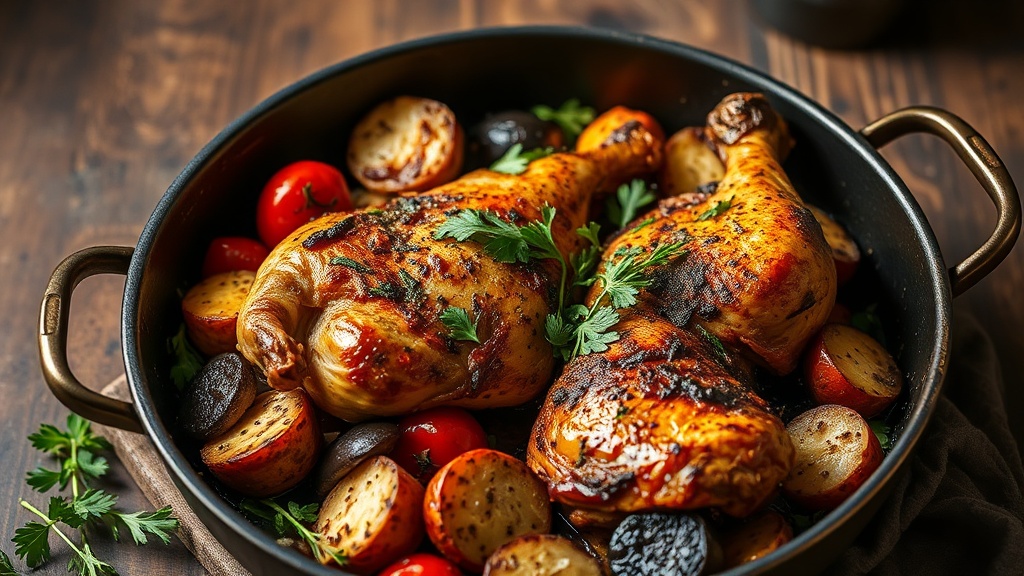
One-Pan Mediterranean Chicken with Roasted Vegetables

One-pan Mediterranean chicken delivers a complete dinner with minimal cleanup—crispy seasoned chicken thighs nestled among caramelized zucchini, bell peppers, and cherry tomatoes. This cooking method concentrates flavors while the rendered chicken fat creates a natural sauce that coats every vegetable. The technique works for busy weeknights (under 45 minutes) and impressive weekend entertaining alike. You'll learn the specific spice blend that defines authentic Mediterranean flavor, the best vegetables for even roasting, and the exact oven temperature that yields golden skin without drying the meat.
What makes Mediterranean chicken so healthy?
The Mediterranean diet consistently ranks among the world's healthiest eating patterns—this dish exemplifies why. Extra virgin olive oil replaces butter, lean chicken provides protein without excess saturated fat, and the vegetable-to-meat ratio delivers fiber and micronutrients in every bite.
The Harvard T.H. Chan School of Public Health identifies this eating style as protective against heart disease, type 2 diabetes, and certain cancers. Here's what each component contributes:
- Olive oil: Monounsaturated fats and polyphenols that reduce inflammation
- Garlic and herbs: Antioxidant compounds with antimicrobial properties
- Colorful vegetables: Vitamin C, potassium, and various phytonutrients
- Lean protein: Sustained energy and muscle maintenance without excess calories
The catch? Not all "Mediterranean" recipes are created equal. Some versions drown ingredients in oil or add unnecessary cheese. This preparation uses exactly three tablespoons of California Olive Ranch Everyday Extra Virgin Olive Oil—enough to prevent sticking and carry flavor without turning dinner into a calorie bomb.
What vegetables pair best with Mediterranean chicken?
Zucchini, bell peppers, red onion, and cherry tomatoes create the ideal foundation—they roast at the same rate as chicken thighs and release moisture that keeps the meat juicy.
The key is density matching. Root vegetables (potatoes, carrots) require longer cooking than quick-roasting options. Here's how different vegetables perform in this single-pan method:
| Vegetable | Prep | Roast Time | Best Feature |
|---|---|---|---|
| Zucchini | Half-moons, ½-inch thick | 35-40 min | Becomes creamy inside, edges crisp |
| Bell peppers | 1-inch strips | 35-40 min | Natural sweetness intensifies |
| Cherry tomatoes | Whole | 35-40 min | Burst into sauce-like consistency |
| Red onion | Wedges through root | 35-40 min | Edges char, centers stay tender |
| Artichoke hearts | Halved (canned or frozen) | 30-35 min | Absorbs chicken drippings beautifully |
| Kalamata olives | Pitted, whole | Add last 10 min | Briny contrast (don't overcook) |
Worth noting: frozen artichoke hearts (not marinated) from Trader Joe's work beautifully here. They thaw quickly and won't make the dish taste canned. Fresh artichokes demand too much prep for a weeknight—save those for special occasions.
How long does one-pan Mediterranean chicken take to cook?
Forty minutes at 425°F (218°C)—25 minutes for the chicken and vegetables together, then 15 minutes with the chicken resting on a plate while the vegetables finish caramelizing.
The timing breaks down practically:
- Prep (10 minutes): Chop vegetables, pat chicken dry, mix spices
- Initial roast (25 minutes): Chicken goes in skin-side up, vegetables underneath
- Rest and finish (15 minutes): Chicken rests (critical for juicy meat), vegetables continue roasting
Here's the thing about that resting period—it's non-negotiable. Chicken thighs continue cooking from residual heat. Cutting too early releases juices onto the cutting board instead of keeping them in the meat. Those extra 15 minutes also give the vegetables time to develop the Maillard reaction—that complex browning that transforms raw peppers into something sweet and deeply flavored.
For bone-in, skin-on thighs (recommended), internal temperature should hit 165°F (74°C) before resting. A ThermoPop 2 instant-read thermometer removes guesswork—it's accurate within ±1°F and costs significantly less than professional models.
What ingredients create authentic Mediterranean flavor?
Dried oregano, garlic, lemon, and good olive oil form the backbone—skip the "Italian seasoning" blend and use specific herbs in specific proportions.
The spice mix that defines this dish:
- 2 teaspoons dried oregano (Greek or Turkish, not Mexican)
- 1 teaspoon smoked paprika (Pimentón de la Vera adds subtle heat)
- 1 teaspoon garlic powder (fresh garlic burns at high heat)
- ½ teaspoon ground cumin (warmth without overpowering)
- 1 teaspoon kosher salt (Diamond Crystal brand—Morton measures differently)
- ½ teaspoon black pepper, freshly ground
That said, technique matters as much as ingredients. Pat chicken thighs completely dry with paper towels before seasoning—moisture prevents crisping. Rub the spice mix under the skin too, not just on top. The fat layer between skin and meat carries flavor throughout.
Fresh lemon adds brightness that dried spices can't replicate. Zest the lemon before juicing (the oils in zest contain more aromatic compounds). Add lemon juice only after cooking—high heat makes fresh lemon juice bitter.
Feta cheese, added at the very end, provides salty creaminess without melting away. Use authentic Greek feta (sheep's milk or mixed milk) from brands like Dodoni rather than generic cow's milk versions that taste bland and rubbery.
Why does this recipe work so well for meal prep?
The components stay distinct for four days—chicken doesn't get soggy, vegetables maintain texture, and flavors actually improve as they meld.
Storage guidelines that preserve quality:
- Refrigerator: Store in glass containers (Pyrex or Anchor Hocking) for up to 4 days—plastic absorbs garlic odors
- Freezer: Not recommended; zucchini becomes mushy when thawed
- Reheating: 350°F oven for 10 minutes restores crispness better than microwave
The catch with leftovers? Don't pre-dress with extra olive oil before storing. The chicken releases enough fat during reheating. Add a fresh drizzle of oil and squeeze of lemon just before eating—this revives flavors that dull during refrigeration.
What mistakes ruin one-pan chicken dinners?
Overcrowding the pan tops the list—vegetables steam instead of roast, chicken skin stays pale and rubbery.
Success requires a half-sheet pan (18x13 inches), not a 9x13 casserole dish. The Nordic Ware Naturals Big Sheet provides the surface area necessary for proper air circulation. If ingredients pile on top of each other, you'll end up with boiled vegetables in chicken drippings—not the caramelized edges that make this dish worthwhile.
Other common errors:
- Using chicken breasts: They dry out before vegetables finish. Thighs contain more fat and connective tissue that keeps meat moist
- Skipping the preheat: Starting chicken in a cold oven renders fat slowly, resulting in greasy skin
- Cutting vegetables unevenly: A thick zucchini round and a thin one cook at different rates—uniform ½-inch pieces ensure everything finishes together
- Forgetting to rotate the pan: Most ovens have hot spots; turning the pan 180° at the 20-minute mark ensures even browning
Worth noting: boneless, skinless thighs work in a pinch, but reduce cooking time to 20 minutes total and expect less flavor. The skin renders fat that coats vegetables—without it, add an extra tablespoon of oil to compensate.
How do you serve this for different occasions?
The base recipe adapts to casual family dinners, meal prep containers, or dinner parties with simple adjustments.
For weeknight family meals: Serve directly from the sheet pan with crusty bread (La Brea Bakery Take & Bake works well) to soak up juices. Add a simple cucumber salad on the side for crunch.
For meal prep: Portion into individual containers with ½ cup cooked orzo or farro underneath. The grains absorb excess moisture and create a complete nutritional profile.
For entertaining: Transfer to a large platter, garnish with fresh parsley and dill, and add a bowl of tzatziki (Cedar's brand if store-bought, or make your own with Greek yogurt, cucumber, and mint). Present the sheet pan as "rustic"—the slight char on vegetables signals home cooking rather than catering.
Wine pairing? A Greek Assyrtiko (Santo Wines from Santorini is widely available) cuts through the richness with its citrus minerality. For red wine drinkers, a Côtes du Rhône Villages provides enough body without overwhelming the herbs.
The beauty of this technique lies in its flexibility. Master the timing and spice proportions once, then swap vegetables seasonally—asparagus in spring, eggplant in summer, hearty root vegetables in winter. The method stays constant even as ingredients shift.
Print this recipe. Tape it inside your cabinet. Next time you're staring into the refrigerator at 6 PM wondering what to make, you'll have a proven path to dinner that requires exactly one pan to wash.