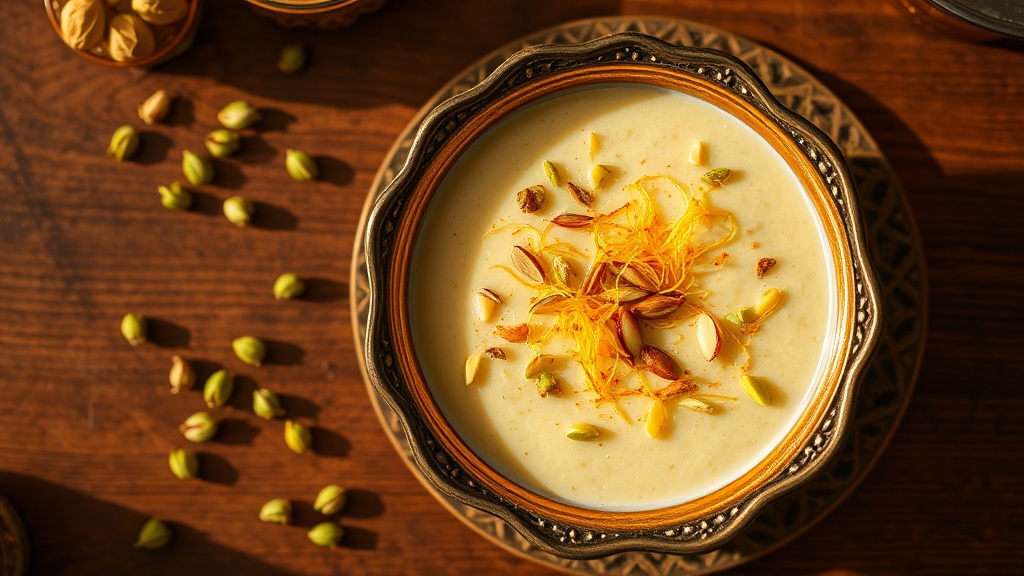
Sheer Khurma Is the Eid Dessert That Will Teach You Everything About Milk

Eid morning in my building smells like cardamom hitting hot ghee at 6 a.m.
I know because Mrs. Ansari on the fourth floor starts her sheer khurma before fajr prayer, and by the time I'm stumbling to my kitchen for coffee, the hallway has already made its decision about what matters today. Her version — Hyderabadi, she'll tell you, with a look that dares you to confuse it with the Lucknowi style — uses so many pistachios that the bowl looks like it's been dipped in green velvet.
Sheer khurma is the dish that marks the end of Ramadan. Literally: sheer means milk, khurma means dates. It's the first sweet thing on the Eid al-Fitr table, served after prayer, before anything else gets eaten. And with Eid falling around March 19th this year, you have exactly enough time to source what you need and practice once before the real thing.
I've been making my own version for six years — not because I observe Ramadan, but because this dessert taught me more about milk science than any pastry class I ever audited.
Why Sheer Khurma Is a Lesson in Fat-Soluble Flavor
Here's what's actually happening in that pot, because understanding this will make you a better cook at literally everything else:
Step one is frying vermicelli in ghee. Not toasting — frying. The vermicelli needs to turn deep golden in clarified butter, and what you're doing is a Maillard reaction on wheat protein while simultaneously infusing the fat with nutty, caramelized flavor compounds. If your vermicelli looks pale blonde, you pulled it too early. You want the color of a well-used cutting board.
Step two is blooming cardamom, saffron, and sometimes nutmeg in that same ghee. Sound familiar? This is tadka logic applied to a dessert. The fat-soluble terpenes in green cardamom — particularly 1,8-cineole — extract into ghee at temperatures that milk alone can never reach. This is why the cardamom flavor in good sheer khurma hits differently than cardamom stirred into hot milk. You're getting compounds that water-based extraction leaves behind.
Step three is the milk reduction. Full-fat whole milk, no substitutions, no negotiations. You're reducing it by roughly a third, which concentrates the lactose (more sweetness without adding sugar), the casein proteins (body and mouthfeel), and the milk fat (which merges with the ghee to create an emulsion that coats the vermicelli and carries every aromatic you've built).
When it all comes together — fried vermicelli softening in spiced, reduced milk — you have a dessert that is technically a pudding but texturally closer to the best parts of tres leches and kheer having a conversation.
The Sourcing Trip You Need to Make This Weekend
You need exactly one stop: Patel Brothers, or whatever South Asian grocery anchors your neighborhood. Here's your list:
- Roasted vermicelli (seviyaan): Get the thin kind, not the thick one labeled "spaghetti style." Bambino brand is reliable and usually under $2. Some packages say "roasted" but they're barely tan — you'll still fry them yourself.
- Green cardamom pods: Buy whole pods, not pre-ground powder. Crack them yourself. The volatile oils in pre-ground cardamom have a half-life measured in weeks once the package opens, and that dusty jar in your spice rack is lying to you about its potency.
- Saffron: You need about 15–20 threads. Real saffron, not the "saffron color" packets near the checkout. If the price doesn't make you wince slightly, it's not saffron.
- Medjool dates: Four or five. You're slicing them thin and letting them dissolve into the milk. Deglet Noor will work in a pinch, but Medjool dates have that toffee-caramel quality that makes the finished dish taste more expensive than it is.
- Pistachios and almonds: Raw, unsalted. You'll blanch the almonds and sliver them yourself if you care about texture. The pre-slivered ones from the baking aisle oxidize faster and taste like cardboard.
- Chironji (charoli) seeds: Optional but worth the $3 packet. These tiny seeds add a texture — somewhere between a pine nut and a macadamia — that is completely unique. Mrs. Ansari insists they're non-negotiable. I'm not going to argue with her.
Total damage: under $15 for enough to make sheer khurma twice, which means you get a practice run.
My Working Method (Two-Burner Reality)
This is scaled for my kitchen, which means one medium saucepan and one small pan, both competing for burner space. Serves 4–6.
Ingredients (by weight, because I will die on this hill):
- 1 liter whole milk (about 1030g — yes, milk is denser than water)
- 70g thin roasted vermicelli, broken into 2-inch pieces
- 40g ghee (or unsalted butter, clarified by you in 5 minutes if needed)
- 30g sugar (adjust after tasting — the dates add sweetness)
- 4 Medjool dates, pitted and sliced thin
- 20g pistachios, roughly chopped
- 15g almonds, blanched and slivered
- 6 green cardamom pods, seeds extracted and crushed
- 15–20 saffron threads, bloomed in 1 tablespoon warm milk
- 1 tablespoon chironji seeds (if you found them)
- Pinch of freshly grated nutmeg
The process:
1. Fry the nuts first. Melt 15g of the ghee in your saucepan over medium heat. Add almonds and pistachios, stir constantly for 2–3 minutes until they're golden and fragrant. Remove with a slotted spoon and set aside. If using chironji, give them 30 seconds in the same fat — they go from raw to done fast.
2. Fry the vermicelli. Add the remaining 25g ghee to the same pan. Drop in the broken vermicelli and stir continuously. This takes 3–4 minutes. You're looking for a deep golden brown and a toasty, almost biscuit-like smell. The second you smell anything approaching burnt, pull the pan off the heat. There is no recovering from burnt vermicelli.
3. Bloom the spices. Push the vermicelli to one side, drop the crushed cardamom seeds into the ghee at the edge of the pan for 20 seconds. Add the nutmeg. The kitchen should smell like a reason to get out of bed.
4. Add the milk. Pour in the full liter of cold milk. Yes, cold — it stops the cooking and deglazes any fond from the vermicelli. Stir well. Bring to a gentle boil over medium heat, then immediately reduce to low.
5. Reduce and cook. Simmer for 15–18 minutes, stirring every 2–3 minutes to prevent a skin from forming and to keep the milk from scorching on the bottom. The vermicelli will soften. The milk will reduce. You'll know you're there when a spoon dragged across the bottom leaves a brief trail before the liquid closes back in.
6. Finish. Add the sliced dates, sugar, saffron with its blooming milk, and half of the fried nuts. Stir gently. Cook for another 3–4 minutes. The dates will start to dissolve at the edges, adding body and a caramel note that granulated sugar can't replicate.
7. Rest and serve. Here's the critical knowledge: sheer khurma thickens significantly as it cools. If it looks "done" in the pot, it will be paste on the plate. Pull it when it still looks slightly looser than you want. Let it sit for 10 minutes, then serve warm (not hot) in small bowls, topped with the reserved nuts and a few extra saffron threads.
The Three Mistakes That Will Ruin It
Under-frying the vermicelli. Pale vermicelli tastes like nothing and turns to mush in the milk. You need that Maillard development. It should smell like buttered toast, not raw pasta.
Using low-fat milk. I understand the impulse. I reject it completely. The fat in whole milk is doing structural work here — it creates the emulsion that gives sheer khurma its characteristic silky body. Skim milk will give you sweet, thin soup with noodles in it. That is not sheer khurma. That is a cry for help.
Overcooking the final product. The single most common failure. The vermicelli continues absorbing liquid as the dish cools. Every grandmother I've talked to says the same thing in different languages: take it off the heat when it looks too thin. They are all correct.
What This Dish Is Actually About
I could tell you that sheer khurma "brings families together" and leave it at that, but this is Global Flavors, so let me be more specific.
Sheer khurma is the dish of return. It marks the end of a month of discipline, of recalibration, of intentional hunger. The first sweet bite after Eid prayer isn't just sugar and milk — it's a threshold. Every family I've sat with during Eid treats this bowl differently. Mrs. Ansari's version is heavy with nuts and dates because her family is from a tradition where abundance on the Eid table reflects gratitude. My friend Farah's mother makes hers almost soup-thin and barely sweet because, she says, "the body needs to come back slowly."
Both are correct. That's the point. The dish adapts to the family, not the other way around.
If you're not Muslim and you're reading this, make it anyway. Make it because it will teach you about milk reduction, about fat-soluble flavor extraction, about the Maillard reaction on wheat, about the structural role of dairy fat in desserts. Make it because a $15 grocery run and 40 minutes of work will produce something that tastes like it cost ten times that.
And if you are observing Ramadan and you're reading this in the final days — may your Eid table be exactly as heavy or as light as your family needs it to be.
Eid Mubarak. See you at Patel Brothers.