The 135-Enzyme Alchemist: What Koji Mold Is Actually Doing to Your Food (And Why It Took Humans 3,000 Years to Figure It Out)

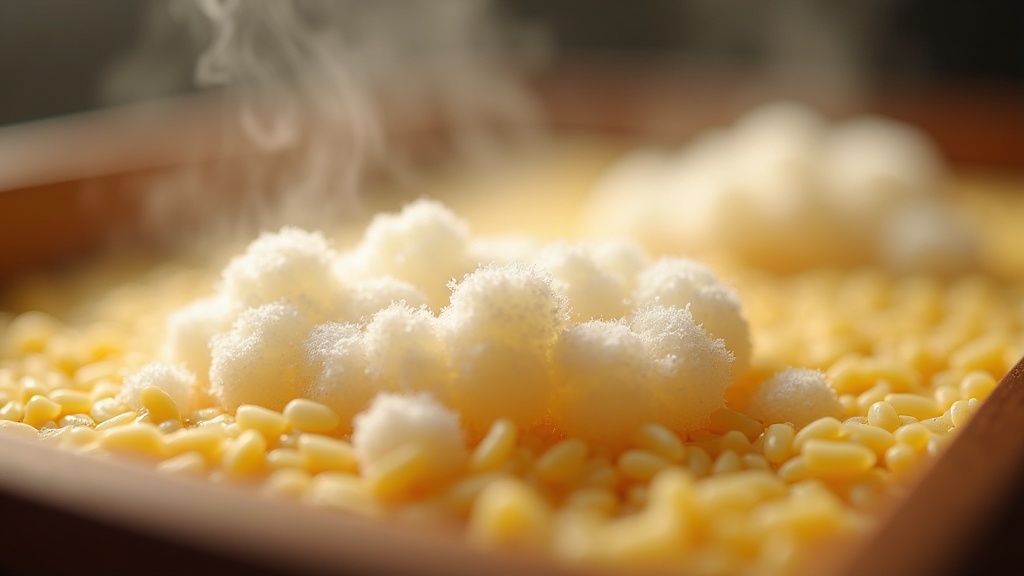
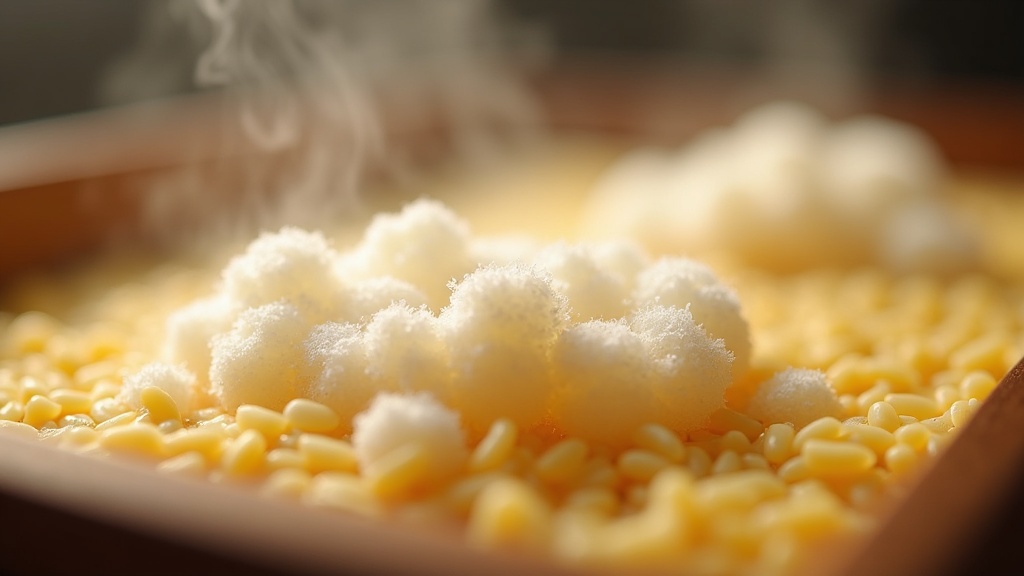
Listen. That white fuzz spreading across your steamed rice isn't rot. It's one of humanity's oldest biotechnologies—a domesticated fungus we've been selectively breeding for over three millennia. And it's performing enzymatic alchemy that would make a modern chemistry lab blush.
Aspergillus oryzae—the koji mold—contains 135 distinct protease genes in its genome. That's not a typo. This single organism is capable of expressing over a hundred different enzymes that break down proteins, starches, and fats into their flavor-bearing constituents. When you grow koji properly, you're not just fermenting. You're conducting a molecular symphony.
The Enzymatic Cascade: What's Actually Happening
Most home cooks think fermentation is about bacteria converting sugars to acids. Koji is different. It's enzymatic, not bacterial. The mold doesn't eat your food—it predigests it for you, unlocking flavors that were chemically locked away.
Here is the move: Koji operates in three distinct enzymatic phases, each requiring precise temperature control.
Phase 1: Proteolysis (32-35°C)
The proteases—those 135+ protein-breaking enzymes—begin dismantling long-chain proteins into amino acids. Peak activity hits around 84.38 units per gram of dry koji under optimal conditions. (This isn't gentle breakdown; it's molecular disassembly. The proteases are cutting peptide bonds with the mechanical precision of surgical tools.)
The result? Free amino acids. Glutamine becomes glutamate—the molecule responsible for umami. This isn't "savory flavor." This is the actual chemical compound that your tongue's glutamate receptors evolved to detect as "protein-rich food."
Phase 2: Saccharification (50-60°C)
The amylases—primarily α-amylase and glucoamylase—attack starch chains. Peak activity here hits 200 units per gram. These enzymes cleave the 1,4-glycosidic bonds in amylose and amylopectin, converting complex carbohydrates into simple sugars.
This is why koji rice tastes sweet. The mold has literally turned starch into glucose, maltose, and other reducing sugars. In sake production, this phase is critical—the sugars become food for yeast in the subsequent fermentation.
Phase 3: Glutaminase Activation (Low-Temperature Stress)
Here's where it gets interesting. Recent research shows that A. oryzae responds to low-temperature stress (below 15°C) by accelerating autolysis—essentially, the mold begins digesting itself. This releases cell wall-bound glutaminase enzymes that convert glutamine to free glutamate at accelerated rates.
In soy sauce production, this low-temperature shock during the initial moromi phase creates significantly higher glutamate concentrations. The mold is literally sacrificing itself to create more umami. (Evolution doesn't have intentions, but if it did, this would be a remarkably selfless exit strategy.)
The 3,000-Year Domestication
We didn't always know what koji was. The Japanese have been using it for sake, miso, and soy sauce since at least the Nara period (710–794 CE), possibly earlier. But they didn't know they were culturing a specific fungal species. They knew techniques, not taxonomy.
It wasn't until 1876 that H. Ahlburg, a Swedish mycologist invited to the Japanese Medical College, first isolated and described the organism. He named it Eurotium oryzae; F. Cohn later renamed it Aspergillus oryzae when he confirmed it lacked sexual reproduction capability.
Genomic analysis tells us that A. oryzae and its wild ancestor, Aspergillus flavus, diverged roughly 3.8 million years ago. But the domestication—the selection for food-safe strains that don't produce aflatoxins—happened in the human timeframe. We've been unconsciously engineering this organism through selective propagation since the Bronze Age.
The Two-Stage Process: Koji-Making vs. Moromi
Traditional Japanese fermentation uses koji in two distinct phases. Understanding the difference matters if you want to use this technique at home.
Koji-making (Seigiku): This is the solid-state fermentation where the mold grows on steamed rice, barley, or soybeans. Duration: 40–48 hours. Temperature: tightly controlled between 30–35°C for most of the cycle, with a brief spike to encourage sporulation if you're making tane-koji (starter culture). The goal is maximum enzyme production, not alcohol or acid.
Moromi: This is the main fermentation. The koji (now enzyme-rich) is mixed with additional substrate and liquid. In sake, it's koji + more rice + water. In soy sauce, it's koji + soybeans + wheat + brine. The enzymes continue working, breaking down proteins and starches, while yeast (for alcohol) or bacteria (for lactic acid) take over the primary fermentation.
The distinction matters because temperature requirements diverge. What optimizes mold growth (30–35°C) will kill yeast. What makes yeast happy (20–25°C) slows mold enzyme production. This is why traditional breweries have separate koji rooms and fermentation chambers.
Modern Applications Beyond Tradition
Contemporary chefs and food scientists have expanded koji's application well beyond its East Asian heritage. The proteolytic activity that makes it perfect for soy sauce also makes it transformative for:
- Meat aging: Applying koji spores directly to beef or pork accelerates dry-aging. The proteases tenderize muscle tissue while producing glutamate in situ. Results in 48–72 hours that traditionally take weeks.
- Vegetable fermentation: Koji-fermented vegetables maintain crisp texture (unlike lacto-fermentation which softens) while developing umami depth.
- Dairy alternatives: Koji enzymes can create cashew or oat-based products with fermented depth without bacterial sourness.
But listen. If you're going to experiment, respect the organism. A. oryzae is food-safe because we've bred it that way. Its wild relatives produce mycotoxins. Don't assume any white mold is koji. Don't extend fermentation beyond the safe window hoping for "more flavor." When koji sporulates excessively and goes green, you're entering uncertain territory.
The Sourcing Reality: Where to Get Real Koji
Not all koji cultures are equal. Industrial soy sauce manufacturers use proprietary strains selected for specific protease profiles. Home cooks need reliable, non-contaminated starter.
GEM Cultures (Washington State, USA) has been supplying home fermentation cultures for 45 years. Their light rice koji spores are the standard entry point. They also carry barley koji spores for traditional shoyu production.
Cultures for Health offers koji spores with reliable viability, though their selection is narrower.
Brasserie San-O (Canada) produces and sells koji cultures directly—useful for Canadian readers facing import restrictions.
Buy spores, not "koji rice" from questionable eBay sellers. The spore count and viability matters. Cheap starter often produces inconsistent results or contamination. You're investing 48 hours of temperature-controlled effort; don't sabotage it with questionable genetics.
Precision Parameters for Home Koji-Making
If you're going to do this, do it with rigor. Here are the non-negotiables:
Substrate preparation: Steam your rice or barley, don't boil. Boiling waterlogs the grains and creates anaerobic zones where Bacillus species outcompete A. oryzae. Steam until the grain is tender but individual kernels remain distinct.
Inoculation density: Commercial tane-koji is used at roughly 1–2 grams per kilogram of steamed substrate. More isn't better—over-inoculation creates uneven growth and excessive heat generation.
Depth and ventilation: Traditional koji trays hold substrate at 3–5 centimeters depth. This isn't arbitrary—it's the diffusion limit for oxygen penetration and heat dissipation. Go deeper, and the center will overheat or go anaerobic.
Temperature protocol: Start at 30°C. Monitor obsessively. The mold generates metabolic heat—temperature can spike 5–10°C above ambient if you're not ventilating. Use a probe thermometer in the center of the substrate. Adjust with tray rotation or gentle air circulation.
Humidity: 80–90% relative humidity for the first 24 hours, then gradually reduce to prevent excessive moisture that encourages bacterial contamination.
Duration: 40–48 hours for enzyme-rich koji intended for moromi. 72+ hours if you're making tane-koji (you want spore production, not just mycelium).
The Takeaway
Koji isn't a trend. It's a 3,000-year-old biotechnology that modern genomics has only recently begun to decode. When you work with A. oryzae, you're collaborating with an organism that contains 135 different protein-breaking tools in its genetic toolkit, capable of producing 200 units of starch-breaking activity per gram.
This isn't romantic mysticism. It's enzymatic engineering performed by a domesticated fungus that has been shaped by human selection since before written history.
Respect it. Control your temperatures. Source your spores carefully. And remember: that white fuzz is performing molecular transformations that laboratories charge thousands to replicate. You've got 135 enzymes working for you—for free—as long as you don't kill them with imprecision.
Next week's deep-dive: The Maillard reaction on a two-burner stove. Can you get restaurant-quality crust in a Queens walk-up? (Spoiler: yes, but you need to understand evaporative cooling first.)