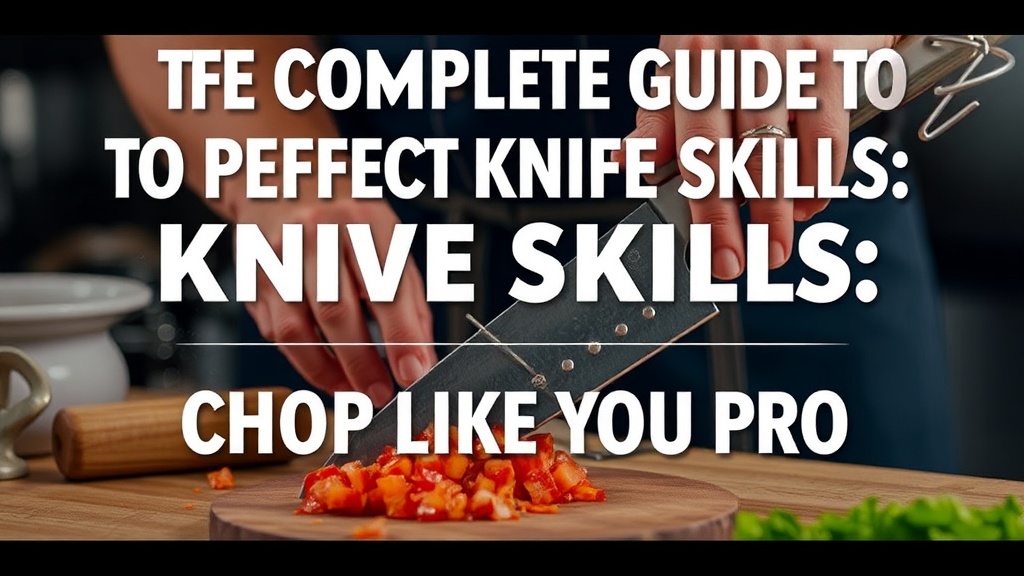
The Complete Guide to Perfect Knife Skills: Chop Like a Pro

Why Knife Skills Matter
This guide covers the essential knife techniques every home cook needs: proper grip, fundamental cuts, blade maintenance, and safety practices. Solid knife skills reduce prep time by 40-50%, ensure even cooking, and minimize kitchen accidents. Whether chopping onions for a French onion soup or julienning carrots for a stir-fry, the right technique transforms cooking from a chore into an efficient, enjoyable process.
Choosing the Right Knife
Three knives handle 95% of kitchen tasks. Understanding each blade's purpose prevents unnecessary purchases and improves results.
The Chef's Knife
The 8-inch chef's knife (Wüsthof Classic, Victorinox Fibrox Pro, or Shun Classic) serves as the workhorse. German blades like the Wüsthof weigh 9-10 ounces with a 14-degree edge angle, excelling at heavy-duty tasks like butchering chicken or splitting squash. Japanese chef's knives such as the Shun Classic weigh 6-7 ounces with a 16-degree angle, offering precision for vegetables and fish. The 8-inch length provides enough blade for rocking cuts while remaining manageable for most hand sizes.
The Paring Knife
A 3.5-inch paring knife handles intricate work: hulling strawberries, peeling garlic, or creating decorative garnishes. The Victorinox Swiss Classic paring knife retails for $8-12 and outperforms many $50 alternatives. The short blade offers control that a chef's knife cannot match for detailed tasks.
The Serrated Bread Knife
The 10-inch serrated blade cuts through crusty sourdough and delicate tomatoes without crushing. The Mercer Culinary Millennia bread knife costs approximately $18 and maintains sharpness for years with minimal maintenance. Serrations grip slippery surfaces where straight blades slide.
The Proper Grip
Most home cooks grip the handle like a hammer. This "hammer grip" limits control and causes fatigue during extended prep sessions.
The pinch grip offers superior control. Pinch the blade between thumb and forefinger where the blade meets the handle—this spot is called the bolster on forged knives. The remaining three fingers wrap around the handle loosely. The pinch grip positions the hand directly over the blade's center of gravity, reducing wrist strain and increasing cutting precision by approximately 30%.
For the guiding hand, curl fingertips inward and tuck the thumb behind the knuckles. This "claw grip" protects fingertips while using the knuckles to guide the blade. The knife should never rise above the middle knuckle—this creates a physical barrier that prevents cuts.
Essential Cutting Techniques
The Rock Chop
The rock chop works best for herbs, garlic, and aromatics. Keep the knife tip anchored to the cutting board. Lift the handle and bring the blade down in a rocking motion. The Wüsthof Classic's curved belly facilitates this movement naturally.
Practice with a bunch of parsley: gather it into a tight ball, hold it with the claw grip, and rock the blade through it continuously. One skilled practitioner can mince a full cup of parsley in 45 seconds using this technique.
The Slice
Slicing requires drawing the blade through food in a single smooth motion. For a medium onion, cut pole-to-pole (through the root and stem ends), not across the equator. This preserves the onion's cellular structure, releasing fewer sulfur compounds that make you cry.
A sharp chef's knife should slice through a ripe tomato with zero downward pressure—only the horizontal drawing motion. If the blade crushes the tomato skin, it needs sharpening.
The Dice
Professional kitchens define dice sizes precisely:
- Large dice: 3/4-inch cubes (suitable for rustic stews)
- Medium dice: 1/2-inch cubes (standard for most recipes)
- Small dice: 1/4-inch cubes (for sauces and stuffings)
- Brunoise: 1/8-inch cubes (for garnishes)
To dice a potato: first square it by cutting off rounded sides. Cut 1/2-inch planks. Stack planks and cut 1/2-inch strips. Rotate strips 90 degrees and cut 1/2-inch cubes. This three-step process ensures uniform pieces that cook evenly.
The Julienne
Julienne produces matchstick-sized pieces: 1/8 inch by 1/8 inch by 2 inches. This cut appears in French cuisine for vegetables like carrots and celery root.
Square the vegetable as with dicing. Cut 1/8-inch planks. Stack three planks and cut 1/8-inch strips. Uniform julienne requires sharp blades—a dull knife crushes rather than slices, producing ragged edges that wilt during cooking.
The Chiffonade
This technique produces thin ribbons of leafy herbs and greens. Stack basil leaves largest to smallest. Roll tightly into a cigar shape. Slice across the roll in 1/8-inch intervals. Unfurl to reveal delicate ribbons perfect for garnishing Margherita pizza or folding into pasta.
Sharpening and Maintenance
A dull knife causes more injuries than a sharp one. Dull blades require excess force, increasing slip potential. Professional kitchens sharpen knives weekly; home cooks should sharpen monthly with regular honing.
Honing vs. Sharpening
A honing steel (12-inch ceramic or metal rod) realigns the blade's edge without removing metal. Honing should occur every 2-3 cooking sessions. Hold the steel vertically with the tip resting on a cutting board. Draw the blade down at a 15-20 degree angle, alternating sides. Ten strokes per side maintains alignment.
Sharpening removes metal to create a new edge. The King KW65 1000/6000 grit water stone costs approximately $30 and lasts years. Soak the stone for 15 minutes, then sharpen at a 15-degree angle (20 degrees for German knives) with consistent pressure. Start with the 1000-grit side to shape the edge, finish with 6000-grit to polish. Ten strokes per side on each grit suffices for maintenance.
Alternatively, the Work Sharp Culinary E5 electric sharpener ($80) produces professional results with guided angles. Avoid cheap pull-through sharpeners—they remove excessive metal and create uneven edges.
Storage and Care
Tossing knives in drawers damages edges. Use a magnetic knife strip, in-drawer organizer, or blade guards. The OXO Good Grips knife organizer ($15) protects blades in crowded drawers.
Never put quality knives in dishwashers. The harsh detergent and knocking against other items dull edges rapidly. Hand wash immediately after use with hot soapy water, dry completely to prevent rust, and store properly.
Carbon steel blades like those from Misono or Togiharu develop a protective patina but rust if left wet. Wipe these blades during use—acidic foods like tomatoes and citrus accelerate oxidation.
Cutting Board Selection
The cutting surface affects blade longevity significantly. Glass, granite, and bamboo dull knives quickly. End-grain wood (maple, walnut) and high-density polyethylene (HDPE) plastic preserve edges best.
The John Boos Reversible Cutting Board (20x15 inches, 1.5 inches thick) provides ample space for vegetable prep. At $120, it represents a long-term investment—properly maintained, it lasts decades. For plastic, the OXO Good Grips cutting board ($25) features grippy edges and a juice groove for meat fabrication.
Sanitize boards after raw meat contact. Wood boards naturally resist bacteria through capillary action that traps microbes, where they die. Plastic boards require dishwasher sanitization or scrubbing with diluted bleach solution (1 tablespoon per gallon of water).
Safety Fundamentals
Emergency rooms treat approximately 330,000 knife-related injuries annually in the United States. Following basic protocols eliminates most risk:
- Cut away from the body. Never slice toward yourself or hold food in your hand while cutting.
- Secure the cutting surface. Place a damp towel under the cutting board to prevent slipping.
- Focus on the task. Distraction causes 60% of kitchen accidents. Set down the knife before answering the phone.
- Transport knives properly. Carry blades pointing down, tip forward, announcing "sharp behind" when passing others.
- Never catch a falling knife. Step back and let it drop.
Keep a first aid kit accessible. For minor cuts, apply direct pressure with a clean cloth for 10 minutes. Deeper wounds require medical attention—stitches work best within 6-8 hours of injury.
Practice Drills for Improvement
Skill development requires repetition. These exercises build muscle memory:
The Onion Challenge: Time yourself dicing three medium yellow onions into 1/4-inch pieces. Initial attempts typically take 8-10 minutes. With practice, this drops to 3-4 minutes with consistent sizing.
The Carrot Julienne: Practice on five large carrots. Aim for 1/8-inch uniformity. Collect the pieces in a bowl—visual comparison reveals sizing inconsistencies.
The Herb Mince: Mince one cup of fresh parsley using the rock chop. The goal is a fine, even mince without bruising or browning. Proper technique produces bright green results; poor technique yields dark, wet paste.
Building Your Skills Over Time
Knife skills develop through consistent practice. Start with the rock chop and basic slicing before attempting complex cuts. Focus on safety and accuracy first; speed comes naturally with repetition.
Professional cooks spend their first weeks in kitchens exclusively on knife work. The efficiency gained translates directly to better cooking. Even vegetables benefit—uniform pieces caramelize evenly, ensuring the carrot coins in a glazed carrot dish finish simultaneously rather than some burning while others remain raw.
Invest in one quality chef's knife, practice the pinch grip, and dedicate twenty minutes weekly to deliberate practice. Within a month, prep work becomes faster, safer, and more enjoyable—transforming the cooking experience entirely.