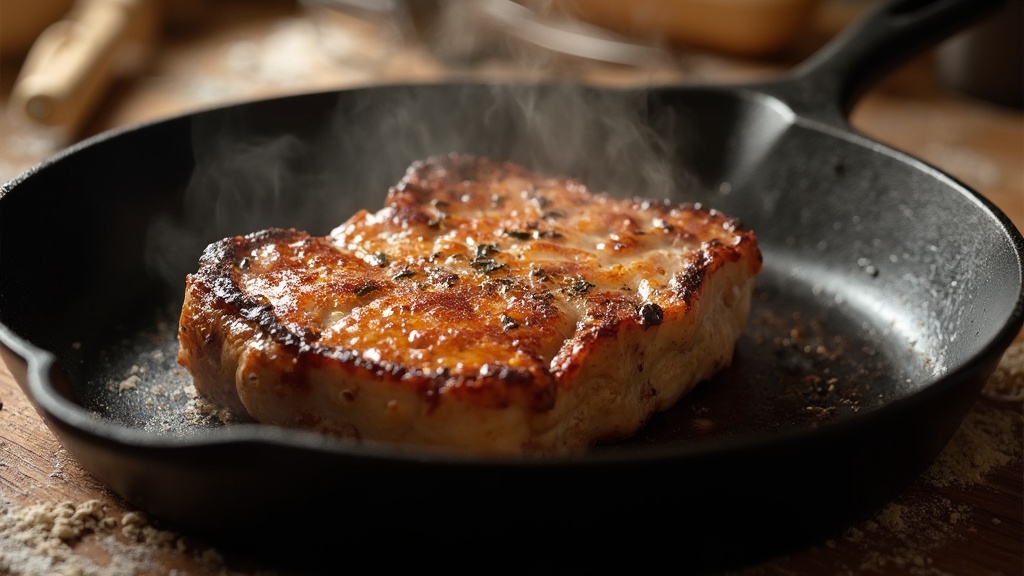
The Maillard Reaction: Why Your Pan is More Important Than Your Passport

The chemistry of flavor doesn't care about your zip code. It cares about heat, amino acids, and the discipline to wait.
Listen. I've spent years watching home cooks destroy beautiful cuts of meat, perfect vegetables, and even simple onions because they don't understand one fundamental truth: browning is not burning. It's chemistry.
The Maillard reaction—named after French chemist Louis-Camille Maillard, who first described it in 1912—is the single most important chemical process in savory cooking. It's what separates a proper socarrat in Spanish paella from sad, steamed rice. It's what gives Cantonese wok hei its smoky, ethereal depth. It's why a well-seared steak tastes like itself, and why a boiled one tastes like disappointment.
And here's the part that matters: you can achieve this in a 400-square-foot apartment with a $25 cast-iron skillet. No passport required. No professional kitchen. Just understanding.
What the Maillard Reaction Actually Is
At its core, the Maillard reaction is a chemical dance between amino acids (the building blocks of protein) and reducing sugars (carbohydrates that can donate electrons). When exposed to heat—typically between 280°F and 330°F (140°C–165°C)—these molecules rearrange, break apart, and recombine into hundreds of new flavor compounds.
(This is different from caramelization, which only involves sugars and happens at higher temperatures. The Maillard creates savory, meaty, nutty, and complex flavors. Caramelization creates sweetness. Both matter. They're not the same.)
The reaction produces:
- Pyrazines: Nutty, roasted, sometimes popcorn-like aromas
- Furans: Sweet, caramel, burnt notes
- Thiophenes: Meat-like, sulfurous depth
- Thiazoles: Savory, roasted complexity
These aren't just abstract chemicals. They're the reason a properly browned onion tastes like umami heaven, while a steamed one tastes like... wet.
Why Most Home Cooks Get It Wrong
Here is the move: moisture is the enemy of the Maillard reaction.
Water boils at 212°F (100°C). The Maillard reaction needs significantly more heat than that. If your food is wet—if you've crowded the pan, if you're using a non-stick skillet that can't hold thermal mass, if you've added ingredients before the pan is properly hot—you're not browning. You're steaming.
I've watched people throw a beautiful ribeye into a cold pan "so it heats up slowly." I've seen onions dumped into a crowded Dutch Pool of their own sweat. I've witnessed mushrooms—nature's sponges—hit the pan without being properly dried first.
Every time, the result is the same: gray, flabby, flavorless food that tastes like it was cooked in a hospital cafeteria.
The Global Evidence
Let's look at how different cultures harness this same chemical reaction:
The Spanish Socarrat
In Valencia, the bottom layer of paella isn't just cooked rice—it's a controlled Maillard reaction. The rice is left undisturbed over high heat until the starches caramelize and the proteins in the broth create that crackling, nutty crust. It's not burnt. It's transformed.
The technique requires a wide, shallow pan (the paellera), high heat, and the discipline not to stir. Sound familiar?
Cantonese Wok Hei
Literally "breath of the wok," this is the Maillard reaction pushed to its limits. A properly seasoned carbon steel wok holds intense heat. When ingredients hit that surface—dry, in small batches, at volcanic temperatures—the amino acids and sugars undergo rapid browning while simultaneously picking up smoky compounds from the seasoned metal.
The result is that ethereal, slightly charred, deeply savory flavor that defines proper Cantonese stir-fry. You can't fake it with a non-stick pan. You can't achieve it by crowding. It requires heat, space, and respect for the chemistry.
Japanese Yaki Everything
From yakitori to yakisoba, Japanese cuisine understands that the Maillard reaction is where umami lives. The binchotan charcoal used in high-end yakitori grills burns at over 1,000°F, creating intense, immediate browning on the surface of skewered chicken while keeping the interior juicy.
The tare sauce—the sweet-savory glaze—isn't just for flavor. The sugars in it accelerate the Maillard reaction, creating that lacquered, caramelized exterior.
The French Fond
Those brown bits stuck to the bottom of your pan after searing meat? That's concentrated Maillard reaction. French technique calls it the fond (foundation), and it's the base of every proper pan sauce.
Deglaze with wine or stock, scrape up those browned amino-sugar complexes, and you've captured the essence of the meat in liquid form. This isn't just tradition—it's chemistry preservation.
Here Is the Move: How to Master It
If you're ready to stop steaming your food and start transforming it, here's the protocol:
1. Dry Everything
Pat your meat dry with paper towels. If you're cooking mushrooms, sauté them in a dry pan first to drive off moisture, then add oil. For vegetables, make sure they're not wet from washing—water is the enemy.
2. Use the Right Pan
Cast iron or carbon steel. These materials hold thermal mass. When cold food hits them, they don't drop 100 degrees immediately. Non-stick pans can't achieve the temperatures needed for proper Maillard reactions, and they degrade at high heat anyway.
(Listen: that ceramic non-stick you bought because it was "healthy"? It's not helping you here. Get a $25 Lodge cast-iron skillet and season it properly. It will outlive you.)
3. Don't Crowd
When food is crowded, it steams in its own juices. Work in batches. Leave space between pieces. Yes, it takes longer. Yes, it's worth it.
4. Let It Be
Once food hits the pan, leave it alone. The urge to stir, flip, move things around is strong. Resist it. The Maillard reaction needs sustained contact with hot metal. If you're constantly moving the food, you're interrupting the chemical process.
How do you know when to flip? When it releases easily. If it's sticking, it's not ready. The browning creates a non-stick surface naturally—trust the chemistry.
5. Manage Your Heat
High heat is necessary, but control matters. Start with a screaming hot pan for searing, then moderate the heat to finish cooking without burning. The Maillard reaction happens quickly—seconds in some cases. You want deep brown, not black.
6. Use Fat Wisely
Fat conducts heat and creates contact between food and pan. But too much, and you're frying. Too little, and you're sticking. For a standard 12-inch cast-iron skillet, 1–2 tablespoons of oil with a high smoke point (avocado, grapeseed, refined peanut) is the sweet spot.
The Science of Failure
Let's talk about what happens when you get it wrong—because I've gotten it wrong, and understanding the failure teaches more than the success.
Gray, flabby meat: Your pan wasn't hot enough, or you crowded it, or the meat was wet. The moisture boiled before the Maillard reaction could start. You steamed instead of seared.
Black, acrid crust: You went too hot for too long. The Maillard reaction crossed into pyrolysis—actual burning. The carbon compounds created here are bitter, not savory. There's no saving it. Start over.
Uneven browning: Your pan has hot spots (common in cheap cookware), or you didn't let it preheat evenly. Cast iron needs time—5–10 minutes over medium heat—to reach thermal equilibrium.
Sticking: You flipped too early, or your pan isn't properly seasoned, or there wasn't enough fat. The proteins haven't denatured and released from the surface yet. Wait for the release.
Why This Matters Beyond the Recipe
I've spent my career studying how flavor travels—how techniques migrate across borders, how ingredients follow trade routes, how grandmothers in Oaxaca and grandmothers in Osaka arrive at similar solutions because they're working with the same physics.
The Maillard reaction is universal chemistry. It doesn't care about culture, cuisine, or kitchen size. A proper sear in Queens creates the same compounds as a proper sear in Seoul.
What varies is the cultural context—the specific ingredients, the traditional vessels, the accumulated wisdom of generations who understood that browning equals flavor even if they couldn't name the amino acids.
When you understand the Maillard reaction, you're not just following a recipe. You're participating in a global lineage of cooks who understood that heat plus protein plus time equals transformation.
The Pantry Note: Sourcing
For this work, you don't need special ingredients. You need the right tools:
- Cast-iron skillet: Lodge 12-inch, available at any hardware store or online for ~$25. Season it yourself or buy pre-seasoned.
- Instant-read thermometer: The ThermoWorks Thermapen or any accurate digital probe. You need to know your pan temperature, not guess.
- High smoke-point oil: Refined avocado oil (520°F smoke point) or grapeseed oil (420°F). Save the extra-virgin olive oil for finishing.
- Metal spatula: For scraping up fond and achieving proper contact. Wood is for stirring, not searing.
That's it. No special ingredients. No imports. Just chemistry, heat, and the discipline to wait.
The Final Word
I've cooked in professional kitchens and in studio apartments. I've made cochinita pibil on a two-burner stove and proper Cantonese stir-fry on an induction plate. The limiting factor has never been the equipment—it's been the understanding.
The Maillard reaction is your passport to flavor. Not because it's trendy or exotic (it's neither—it's chemistry), but because it's the foundation of everything savory and good.
Stop steaming your food. Get your pan hot. Dry your ingredients. Leave them alone.
Let the chemistry work.
Questions? Drop them below. I read everything, and I'll correct any technical errors immediately. Precision matters.