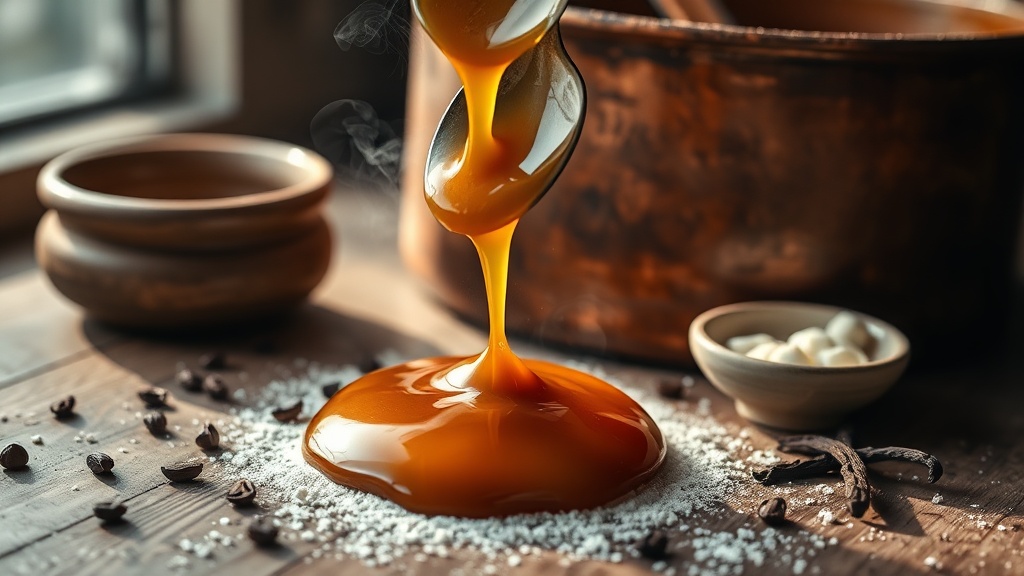
The Miso Caramel Revolution: Why This 1,300-Year-Old Ingredient Is Rewriting the Rules of Sweet

Listen. We've all seen the "trend pieces." The ones that treat centuries-old fermentation science like it was invented last Tuesday on TikTok. So when I started seeing "miso caramel" everywhere—from the parsnip ice cream at Plates London to the brownie swirls on every food blog—I didn't roll my eyes. I got curious.
Because here's the thing: this isn't fusion for clout. This is chemistry. And the chemistry is fascinating.
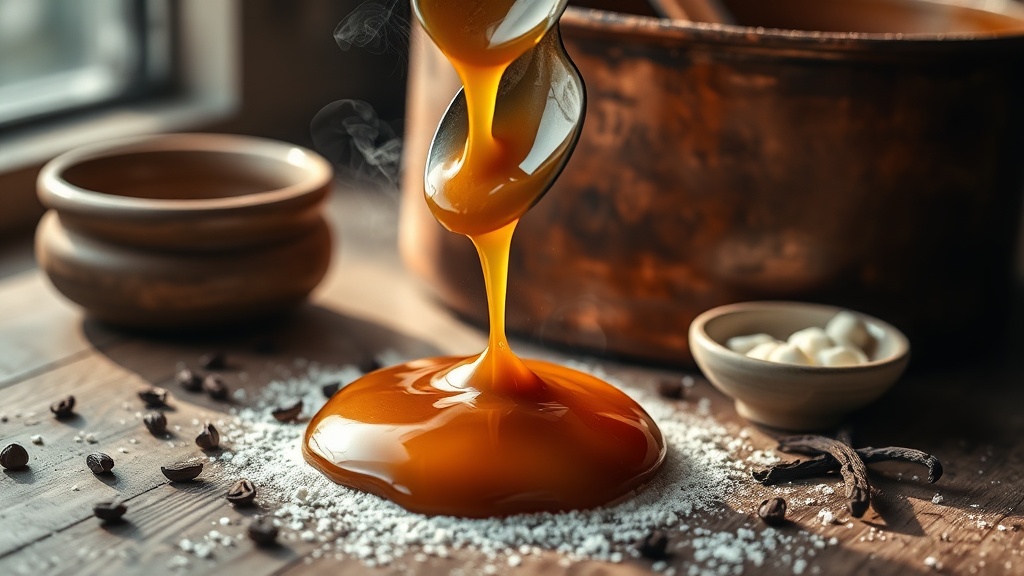
The Science of Why It Works
Miso isn't just "salty." That's reductive, and frankly, lazy. Miso is the product of Aspergillus oryzae—a mold that breaks down soybeans and grains into amino acids, specifically glutamates. (Yes, those glutamates. The umami ones.)
Here's the move: when you introduce miso into a standard caramel base—sugar, fat, heat—you're not just adding salt. You're introducing:
- Glutamic acid: The compound that makes your taste receptors light up like a switchboard
- Proteolytic enzymes: Leftover from fermentation, these continue breaking down proteins even in the caramel matrix
- Maillard precursors: The amino acids and reducing sugars in miso are already halfway to that complex, brooding flavor we chase in caramel
The result? A caramel that doesn't just sit on your tongue—it resonates. High-frequency sweetness layered with low-frequency savory. It's architectural.
A Brief History of Accidental Genius
Miso as we know it emerged in Japan during the 7th century, though fermented soybean pastes existed in China centuries earlier. It was preservation technology. Survival food. Monks and farmers didn't care about "flavor profiles"—they cared about having protein that wouldn't kill them in February.
The irony? That same microbial labor—the koji breaking down starches into sugars, the lactobacillus producing tang—is exactly what makes miso caramel taste like it has depth. Like it has history. Because it does.
(The Japanese have understood this synergy for generations. Miso in desserts—miso soup ice cream, shiro miso cookies—isn't new there. We're just late to the understanding.)
Here Is The Move: Building the Base
I'm not going to give you a recipe in cups. Volume is for poets; grams are for cooks.
The Ratio That Works:
For every 200g of sugar in your caramel, use 30-40g of white (shiro) miso. White miso is younger, sweeter, less aggressive than its red or brown cousins. It integrates without dominating.
The Technique:
- Make your caramel base as usual—dry caramel method preferred for control. Take it to 170°C/338°F (deep amber, not burnt).
- Off heat, whisk in your cream/butter mixture. It will seize and steam. This is normal. Keep whisking.
- Once smooth, add your miso. Not before. The enzymes in miso are heat-sensitive; you want them active in the final product, not cooked into submission.
- Pass through a fine sieve. (Those koji grains? They don't dissolve. Texture matters.)
The result should taste round. Not salty-sweet—that's reductive. It should taste complete.
Sourcing: Where to Find the Real Thing
Listen. That $4 tub of "miso" at your standard grocery? It's fine for soup. For this, you want better.
What to look for:
- Shiro (white) miso: Short fermentation (2-12 months), higher rice-to-soy ratio, sweeter profile. Brands like Hikari Miso or Maruman are reliable imports.
- Awase (mixed) miso: Blend of white and red. Deeper, more complex. Use this if you want a brooding, almost coffee-like caramel.
- Avoid: Anything with added alcohol as a "preservative"—it kills the enzymatic activity you're paying for.
Where to get it:
- H-Mart: Look in the refrigerated section, not the shelf-stable "international" aisle
- Patel Brothers carries it in the Japanese section (ironically)
- Online: Miso Master (Chapel Hill, NC) or South River Miso (Massachusetts) for domestic, traditional production
The Variations Worth Exploring
Once you understand the chemistry, you can riff:
Saikyo Miso Caramel: Kyoto-style sweet white miso (sakura color, almost no soy). Delicate, floral. Pairs with stone fruit.
Hatcho Miso Caramel: All-soybean, 2-3 year fermentation. Intense, almost meaty. Use sparingly; this is for dark chocolate applications.
Koji-First Caramel: Add a spoonful of fresh rice koji to your cream before heating. The enzymes will pre-digest some lactose into simpler sugars. (Yes, this works. Yes, it's technically lactose-reduced caramel. No, I won't apologize for the science.)
What This Trend Actually Means
The Michelin inspectors are right: menus are leaning into bitterness and umami. But this isn't just about "complexity." It's about respect.
For decades, Western pastry has treated "sweet" as the destination. Asian dessert traditions—Japanese wagashi, Chinese tong sui, Korean hangwa—have always understood that sugar is just one frequency in the spectrum. Miso caramel isn't "elevating" caramel. It's returning it to a place of balance.
And that, I think, is why it resonates. Not because it's new. Because it's true.
The Final Word
Make this caramel. Taste it. Notice how it doesn't just coat your mouth—it lingers. That's the glutamates. That's the Maillard products. That's 1,300 years of microbial labor meeting your stove.
And if someone calls it a "hack"? Tell them Sloane says: cooking is a craft, not a computer bypass.
Questions? Hit me with the specifics—hydration levels, temperature curves, koji strains. I respond best to technical detail, not "how do I make this easier."