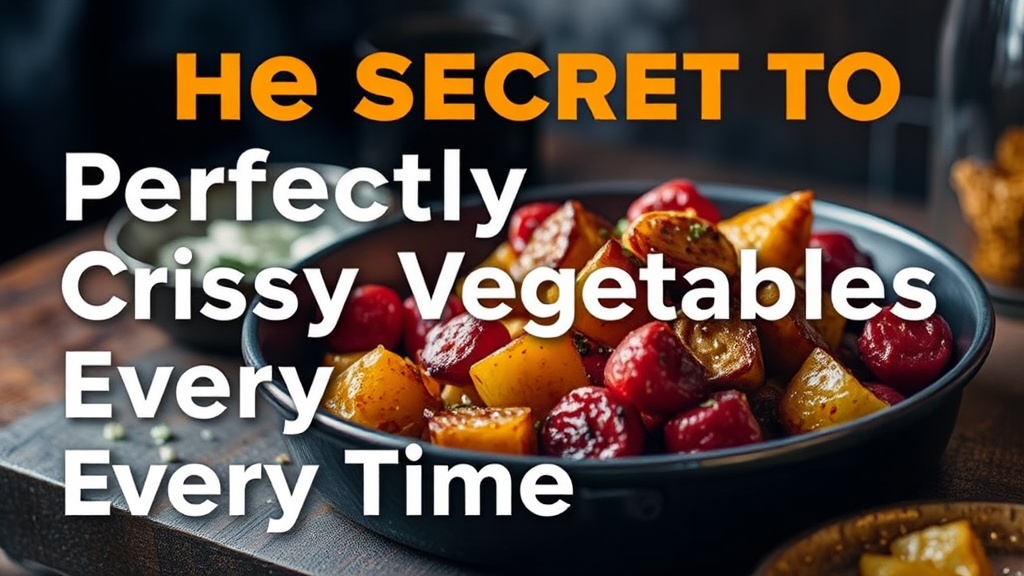
The Secret to Perfectly Crispy Roast Vegetables Every Time

Quick Tip
Don't overcrowd the pan—leave space between vegetables so they roast instead of steam, and preheat your baking sheet for extra crispy edges.
Crispy roast vegetables—golden edges, tender centers, that satisfying crunch—aren't luck. They're technique. This guide breaks down the science-backed methods that transform limp, steamed veggies into restaurant-quality sides you'll actually crave.
Why do my roasted vegetables turn out soggy instead of crispy?
Moisture is the enemy. Vegetables release water as they cook, and if that steam can't escape, you're essentially boiling them in their own juices. The fix? Space and heat—lots of both.
Here's the thing: overcrowding is the most common mistake home cooks make. When vegetables sit too close together, they steam instead of roast. Use a Nordic Ware half-sheet pan and spread pieces in a single layer with gaps between them. Don't own a big enough pan? Roast in batches. The results justify the extra ten minutes.
What temperature should you roast vegetables for maximum crispiness?
425°F (220°C)—minimum. High heat triggers the Maillard reaction, that chemical magic that creates brown, crispy edges and deep flavor.
The catch? Not all vegetables cook at the same rate. Dense root vegetables (carrots, parsnips, beets) need 35–45 minutes. Quicker-cooking options like zucchini or bell peppers? 20–25 minutes. Here's a simple breakdown:
| Vegetable Type | Approximate Time at 425°F | Best Cut Size |
|---|---|---|
| Root vegetables (potatoes, carrots, beets) | 35–45 minutes | 1-inch cubes |
| Cruciferous (broccoli, cauliflower, Brussels sprouts) | 25–35 minutes | Florets or halves |
| Soft vegetables (zucchini, peppers, asparagus) | 15–25 minutes | Halved or 1-inch pieces |
Worth noting: starting with cold vegetables straight from the fridge drops your pan temperature. Let them sit out for 15 minutes before roasting—or better yet, preheat your sheet pan while the oven warms.
Does cornstarch really make vegetables crispier?
Yes—and it's one of the best-kept secrets in professional kitchens. A light dusting of cornstarch absorbs surface moisture and creates an extra-crispy coating.
The technique is simple. Toss chopped vegetables with one teaspoon of cornstarch per pound—along with your oil and seasonings—right before roasting. Don't overdo it; too much creates a gummy layer rather than that shattering crunch you're after.
Oil matters too. Choose fats with high smoke points: California Olive Ranch Everyday (refined, not extra-virgin), avocado oil, or melted ghee. Skip the extra-virgin olive oil for high-heat roasting—it breaks down, turns bitter, and won't get you there. Two to three tablespoons per pound of vegetables is the sweet spot.
Flip halfway through cooking. Use a thin spatula— Dex swears by the OXO Good Grips fish turner—to scrape underneath and release those caramelized bits. That's where the flavor lives.
One final trick: finish with acid. A squeeze of lemon or splash of sherry vinegar right out of the oven brightens the flavor (and doesn't interfere with the crisping process). Season with flaky sea salt while hot—Maldon or Jacobsen—and serve immediately. Crispy doesn't wait.