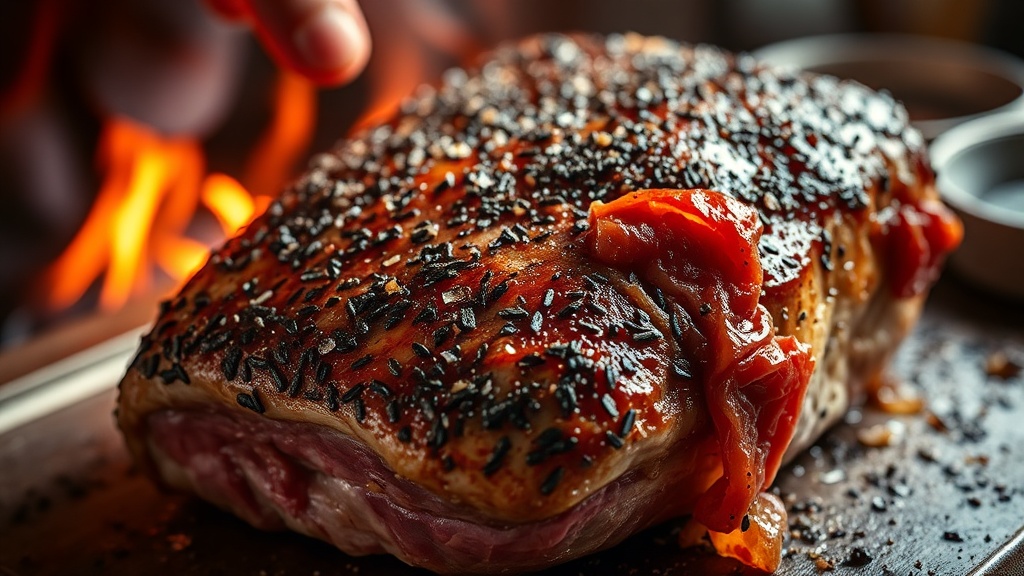
What Is Dry Brining and Why Does It Make Meat Taste Better?

What Is Dry Brining and Why Should You Try It?
Have you ever wondered why restaurant chicken stays juicy while yours turns out bland and dry? The answer isn't some fancy equipment or a secret recipe—it's often something called dry brining. This technique sounds technical (and maybe a bit intimidating), but it's actually one of the simplest ways to transform ordinary meat into something worth remembering. Dry brining is the practice of salting meat well before cooking and letting it rest uncovered in the refrigerator. The salt draws moisture to the surface, dissolves into a concentrated brine, and then gets reabsorbed back into the meat—carrying flavor deep into every fiber.
Unlike wet brining—which involves submerging meat in saltwater and can leave proteins waterlogged and their surfaces too wet to brown properly—dry brining keeps things clean, controlled, and surprisingly effective. You don't need buckets. You don't need to find room in your fridge for a sloshing bag of salty water. You just need salt, time, and a little patience. The result? Meat that's seasoned throughout, with a texture that's firm yet tender and a surface that browns beautifully.
How Does Dry Brining Actually Work?
The science here is straightforward once you understand what's happening at the cellular level. When salt hits the surface of meat, it begins to draw out moisture through osmosis. This moisture dissolves the salt crystals, creating a thin, concentrated brine right on the surface. Over the next few hours—typically 12 to 24 for larger cuts—that brine slowly penetrates back into the meat through diffusion. The salt denatures some of the muscle proteins, allowing them to hold onto more moisture during cooking instead of squeezing it out like a wet sponge.
But there's more to it than just moisture retention. Salt enhances our perception of flavor through a phenomenon food scientists call "flavor potentiation." Even a small amount of salt can amplify the savory, umami notes in meat without making it taste salty. Combine that with improved browning (since dry-brined meat surfaces are drier when they hit the pan or oven), and you've got a compound effect that makes everything taste more like itself—only better.
The timing matters more than most people realize. A quick 30-minute salt rest does almost nothing; the salt hasn't had time to penetrate beyond the outer millimeter. But give it overnight—or even better, 24 to 48 hours for a whole turkey or roast—and the transformation is dramatic. The meat firms up slightly (in a good way), the flavor penetrates deep, and the surface dries out enough to achieve that crackling, golden crust we all chase after. According to Serious Eats' extensive testing on salting techniques, dry-brined meats consistently outperform their unbrined counterparts in both moisture retention and flavor development.
Which Meats Benefit Most from Dry Brining?
Almost any protein can be improved with dry brining, but some respond more dramatically than others. Poultry—especially whole chickens and turkeys—are the poster children for this technique. These birds have a tendency to dry out during roasting, and their relatively mild flavor means they benefit enormously from deep seasoning. A dry-brined turkey will stay moist even if you accidentally leave it in the oven 15 minutes too long. The same goes for chicken breasts, which are notorious for turning into stringy disappointment.
Pork is another excellent candidate. Modern pork is bred to be lean, which makes it prone to drying out. A pork loin or rack of ribs that's been dry-brined overnight emerges from the oven or smoker with better texture and more pronounced flavor. The salt helps break down some of the tougher connective tissue, resulting in meat that slices cleanly but still has a pleasant give when you bite into it.
Beef can be dry-brined too, though the benefits are subtler since beef has more intrinsic flavor and fat to keep it moist. Still, a dry-brined ribeye or roast beef will develop a better crust and more seasoned interior. The one exception is burgers—dry brining ground meat can make it tough and sausage-like, so stick to salting just before cooking for those. Fish is trickier; the salt penetrates extremely quickly due to the delicate protein structure, so you'll want to limit brining time to 15-30 minutes to avoid curing the flesh rather than seasoning it.
How Much Salt Should You Use?
The general rule is about 1 teaspoon of kosher salt per pound of meat—but this varies by salt type. Table salt is denser and saltier by volume, so you'd use roughly half that amount. Diamond Crystal kosher salt (the favorite of most professional chefs) is lighter and flakier, so you can be more generous. The key is consistency: pick a salt, learn how it looks and feels when properly applied, and stick with it.
You want the meat evenly coated but not caked in salt. Think light snowfall, not blizzard. If you can still see the meat clearly through a dusting of salt, you're in the right zone. Don't forget to salt all sides—underneath, between skin and meat if you're working with poultry, and along any crevices. The salt can only penetrate where it touches.
What Happens If You Dry Brine Too Long?
Here's where dry brining shows its forgiving nature. Unlike wet brining, where leaving meat too long results in a mushy, ham-like texture, dry brining has a much wider window of success. A chicken salted for 24 hours will be great. That same chicken at 48 hours? Still excellent—perhaps even better, with more deeply seasoned flesh and drier skin that roasts up incredibly crisp.
Eventually, you can go too far. After several days, the surface of the meat begins to desiccate and take on a leathery appearance. The texture can become slightly cured—think prosciutto rather than fresh roast. For most home cooks, this isn't a realistic concern; you'd have to forget about the meat in your fridge for nearly a week. In practice, anywhere from 12 hours to 3 days produces excellent results for most cuts.
Temperature control becomes important for longer brines. Your refrigerator needs to stay below 40°F (4°C) to keep the meat safe. If your fridge runs warm—or if you're working with a very large cut that takes up significant space—consider placing the meat on a wire rack set over a baking sheet. This promotes air circulation and keeps the bottom from sitting in any accumulated moisture, which could promote bacterial growth.
Do You Need to Rinse Off the Salt Before Cooking?
This is one of the most common questions about dry brining, and the answer is simple: no, you don't need to rinse. By the time you're ready to cook, most of the visible salt has either dissolved into the meat or formed that thin, dry surface that helps with browning. Rinsing would undo some of your work, re-wetting the surface and washing away flavor. Just pull the meat from the fridge, let it come to room temperature for 30-60 minutes if you have time (this promotes more even cooking), and proceed with your recipe.
If you're concerned about the meat being too salty, you salted too heavily—not for too long. The solution is less salt next time, not a rinse. Some cooks like to add black pepper or other dry seasonings before the brining period, while others prefer to add aromatics just before cooking. Both approaches work, though be aware that pepper and herbs on the surface for extended periods can become stale-tasting. If you want maximum freshness from your seasonings, save them for the final hour.
The test kitchen at Cook's Illustrated has documented that dry-brined meats consistently score higher in blind taste tests for both juiciness and overall flavor compared to unbrined controls. And unlike wet-brined meats, they don't have that slightly watered-down taste that comes from absorbing plain water along with the salt.
Give dry brining a try on your next roast chicken or holiday turkey. Start with something small—a couple of chicken thighs or a pork chop—to get a feel for the technique before committing to a larger cut. The difference is immediate and, once you've tasted it, hard to go back from. Good cooking isn't always about adding more steps; sometimes it's about adding the right step at the right time. For more detailed guidance on timing and techniques, Bon Appétit's dry brining guide offers excellent visual references and timing charts for different proteins.