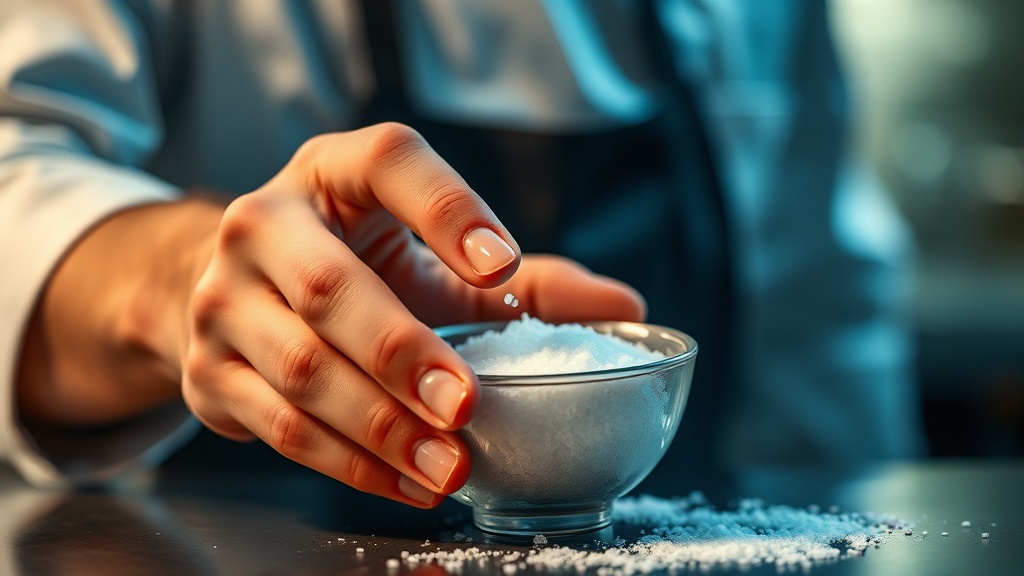
Why Do Chefs Always Reach for That Little Bowl of Salt?

What Makes Restaurant Food Taste Different From Home Cooking?
You've had this experience—you're eating a simple pasta at your neighborhood trattoria, maybe just olive oil and garlic, and it tastes alive. Bright. Confident. You go home and try to replicate it with the same ingredients from the same grocery store, and somehow it falls flat. Not bad, exactly. Just... muted. What happened in that kitchen that didn't happen in yours?
The answer isn't some closely guarded chef secret or expensive equipment. It's salt—and more specifically, when and how you apply it. Most home cooks treat salt as a single step at the end of cooking. Chefs treat it as a continuous process, seasoning at multiple stages to build depth rather than just adding salinity. This guide will walk you through the layered approach to seasoning that transforms good ingredients into memorable dishes.
Before we go further, let's clear something up: this isn't about eating more sodium. A dish properly seasoned throughout cooking often requires less total salt than one salted only at the finish. The difference is timing, distribution, and technique. When you understand how salt interacts with proteins, vegetables, and liquids at different temperatures, you stop seasoning by hope and start seasoning by intention.
When Should You Salt Meat—Before or After Cooking?
The debate about salting meat has generated more kitchen arguments than almost any other topic. Some swear by seasoning hours ahead. Others insist it must happen moments before the pan hits the heat. The truth depends on what you're cooking and how much time you have.
For thick cuts—think pork shoulder, beef brisket, or a whole chicken—salting 12 to 24 hours ahead works wonders. Salt draws moisture to the surface initially (that wet sheen you see after ten minutes), then slowly reabsorbs as the meat rests in your refrigerator. During this process, the salt travels deep into the tissue, seasoning the interior rather than just the exterior. The surface also dries, which means better browning when you finally cook it. J. Kenji López-Alt at Serious Eats has documented this extensively, showing how overnight salting creates noticeably more flavorful results than last-minute seasoning.
For thin cuts—steaks under an inch thick, chicken cutlets, or fish fillets—the calculation changes. You don't have the mass to support long curing without texture changes. Salt these 15 to 40 minutes before cooking, or right before they hit the heat. Anything in between creates that dreaded gray band—meat that has absorbed surface moisture but hasn't had time to reabsorb it, resulting in a steamed rather than seared exterior.
One exception: ground meat. Salt it just before cooking. The texture of ground beef, pork, or lamb changes dramatically with premature salting—proteins begin to bind and tighten, creating that dense, rubbery texture familiar to anyone who has eaten an overworked meatball. Season your mix lightly, form your patties or balls, then season the exterior right before cooking.
Why Does Salted Onion Taste Sweeter Than Raw?
Here's a technique that will change your cooking immediately. The next time a recipe calls for sautéed onions, salt them the moment they hit the pan—not after they've softened. Watch what happens over the next eight to ten minutes. The onions break down faster, release their moisture more readily, and develop a sweetness and complexity that unsalted onions simply don't achieve.
Salt draws water through osmosis. When applied to vegetables, it ruptures cell walls and releases internal moisture. That moisture carries soluble flavor compounds—sugars, amino acids, aromatic oils—into the pan where they can caramelize and develop. An onion cooked without early salting retains more of its sharp, raw character. The same onion, salted early, becomes sweet, golden, and deeply flavored.
This principle extends to almost every vegetable. Salt mushrooms as they hit the pan to help them release their moisture and brown properly. Salt tomatoes before adding them to a sauce to concentrate their flavor. Even hardy vegetables like cabbage and kale benefit from a brief salting before cooking—draw out excess moisture, squeeze it away, and you'll find they cook faster and taste more intensely of themselves.
A word on pasta water: it should taste like the sea. This isn't hyperbole—it's chemistry. Pasta absorbs water as it cooks. If that water is seasoned, the pasta itself becomes seasoned. Sauce clings better to properly salted pasta. The final dish tastes integrated rather than like components sitting next to each other. Bon Appétit's test kitchen recommends about 1 to 1.5 tablespoons per liter—more than most home cooks use, but necessary for proper flavor development.
Can You Fix Oversalted Food?
Everyone oversalts occasionally. The difference between a panicked dinner and a salvageable one is knowing your options—because yes, you can often recover from too much salt.
Dilution is your first and most reliable strategy. For soups, stews, and sauces, simply add more unsalted liquid. Water, stock, wine, or cream all work depending on the dish. Increase the volume and the salt concentration drops. You may need to adjust other seasonings afterward, but the salt itself becomes manageable.
Acid is your secret weapon. A squeeze of lemon, a splash of vinegar, or a spoonful of yogurt doesn't remove salt—your tongue simply perceives acid more prominently, creating balance. This is why fish and chips work: the salty batter meets acidic vinegar. It's why salted caramel works: sugar and fat carry salt, but a hint of acidity (often from the caramelization process itself) keeps it from tasting one-dimensional.
Fat and starch also help. Cream, butter, coconut milk, or olive oil coat the palate and mellow aggressive saltiness. Starches—rice, pasta, potatoes, bread—absorb salty liquid and distribute it across more bites. If you've oversalted a braise, add potatoes and continue cooking. They'll drink up the salty braising liquid and become delicious while saving the dish.
One myth to dispel: potatoes don't magically extract salt from liquid. The old folk remedy of dropping a raw potato into salty soup and removing it is ineffective—Cook's Illustrated tested this thoroughly and found no measurable difference. The potato simply absorbs some of the salty liquid, which you could achieve by ladling some out. Save your potatoes for eating, not chemical extraction.
How Do Different Salts Change Your Cooking?
Walk down the salt aisle of any well-stocked grocery store and you'll find options: fine table salt, kosher salt, flaky sea salt, Himalayan pink, French gray, black volcanic. Do they taste different? Sometimes. Do they behave differently? Absolutely—and this matters more than any subtle mineral flavor.
Table salt is dense and dissolves quickly. It's ideal for baking, where you want salt evenly distributed without crunch. But its fine grain means a teaspoon contains more salt by weight than coarser varieties. This density difference creates real problems when you follow recipes.
Kosher salt—specifically Diamond Crystal, the brand most professional kitchens use—has a flaky, hollow structure. A teaspoon weighs roughly half what table salt does. If you substitute table salt one-for-one in a recipe written for Diamond Crystal, you're doubling the salt. (Morton kosher salt falls between the two—denser than Diamond Crystal, lighter than table salt.) This is why many chefs specify salt by weight rather than volume. If you don't have a scale, know your salt: when a recipe calls for kosher salt, it's assuming Diamond Crystal unless specified otherwise.
Flaky finishing salts—Maldon, fleur de sel, sel gris—belong at the table, not in the cooking. Their texture is the point: delicate crunch, bursts of salinity, visual appeal. Sprinkle them on roasted vegetables just before serving, on chocolate chip cookies as they exit the oven, on sliced tomatoes with olive oil. They dissolve and disappear in hot liquid, wasting their textural contribution.
Building Your Seasoning Instinct
Recipes can't teach you to salt properly. They can give you starting points—"1 teaspoon kosher salt"—but your ingredients vary. Your tomatoes in August are sweeter than your tomatoes in February. Your homemade chicken stock has less sodium than store-bought. Your palate prefers more or less salt than the recipe developer's.
The only solution is tasting—and tasting often. Salt at the beginning of cooking to build foundation. Taste at the middle to assess development. Adjust at the end for balance. Taste again after resting (hot food tastes different than warm food). Keep a small bowl of salt by your stove so you can add pinches without fumbling with shakers. Use your fingers, not a spoon—pinching gives you tactile feedback about quantity.
Pay attention to what salt does, not just what it tastes like. Notice how a salted tomato releases juice. Observe how salted meat browns differently. Taste the difference between vegetables cooked with and without early salting. These observations build intuition faster than any amount of reading.
And remember: you can always add more, but you can't subtract. When in doubt, season conservatively during cooking and adjust at the table. A dish slightly underseasoned is fixable. A dish ruined by excess salt requires major intervention—or the compost bin.
The bowl of salt that sits by every professional stove isn't there for show. It's the most-used tool in the kitchen because seasoning isn't a single decision—it's a conversation between cook and ingredient that happens throughout the process. Start paying attention to that conversation, and your cooking will change immediately.