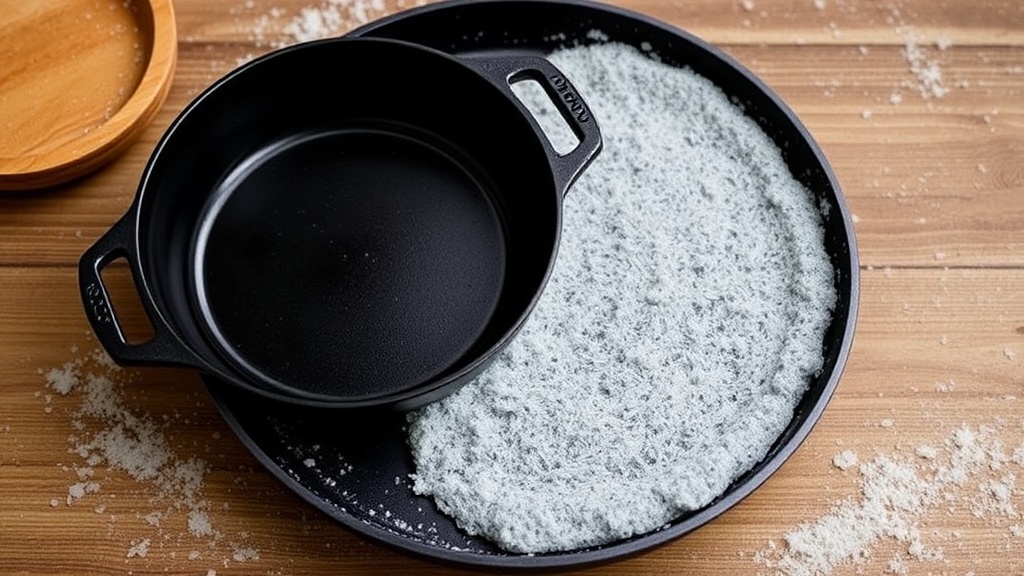
Why Your Cast Iron Isn't Actually Non-Stick—And How to Fix It

Why Do We Keep Repeating This Myth?
Most home cooks believe cast iron skillets come non-stick straight from the store. You've heard it everywhere—cast iron is "naturally non-stick," a pan you can use for eggs on day one, the ultimate replacement for Teflon. Here's the uncomfortable truth: that brand-new Lodge skillet sitting on your stove? It's about as non-stick as sandpaper.
This misconception leads to frustration, stuck-on food, and pans that get abandoned in cabinet purgatory. The reality is that cast iron becomes non-stick through a process called seasoning—a built-up layer of polymerized oil that transforms rough iron into a slick cooking surface. It doesn't happen by magic, and it certainly doesn't happen in the factory. Understanding this distinction is the difference between a pan that lasts generations and one that ends up at the thrift store.
What Is Seasoning, Really?
Seasoning isn't just oil sitting on the surface—it's a chemical transformation. When you heat oil past its smoke point in the presence of iron, the fat molecules break down and bond with the metal. This creates a hard, hydrophobic layer called a polymer. Over time—and with repeated applications—these layers build up into what amounts to a natural, food-safe plastic coating.
The process is called polymerization, and it's the same chemistry that makes your grandma's 50-year-old skillet slide fried eggs across its surface like they're on ice. New pans have a thin factory seasoning that's primarily there to prevent rust during shipping. It's not meant for cooking. Some high-end manufacturers apply better factory coatings than others, but none of them compare to what you'll build yourself through proper use and maintenance.
There's also a difference between raw cast iron (which has no coating) and pre-seasoned pans. Pre-seasoned just means the factory applied a thin layer of vegetable oil and baked it on. It's a starting point—not a destination. Think of it as primer on a wall; you're still going to need several coats of paint before it looks finished.
How Do I Build Proper Seasoning on a New Pan?
The fastest way to develop seasoning is to cook with fat—lots of it. Forget the advice about cooking bacon once and calling it done. Building a proper seasoning layer takes repetition and the right techniques.
Start with high-smoke-point oils like flaxseed, grapeseed, or refined avocado oil. Flaxseed oil creates the hardest seasoning because it contains high levels of alpha-linolenic acid, which polymerizes exceptionally well. The downside? It's expensive and goes rancid quickly. Many enthusiasts swear by the flaxseed method for establishing that initial base layer, then switching to cheaper oils for maintenance.
Here's a proven method: scrub your new pan with soap and steel wool to remove the factory seasoning (yes, soap—it's not going to hurt the iron itself). Dry it completely over heat, then apply a micro-thin layer of oil all over—inside, outside, handle. Wipe it until it looks like you've removed almost all the oil. Then bake it upside down in a 450°F oven for an hour. Let it cool in the oven. Repeat six to eight times. It's tedious. It works.
For daily cooking, start with foods that don't test the non-stick surface too aggressively. Sauté vegetables, sear meats, fry potatoes. These activities deposit tiny amounts of fat that build seasoning gradually. Save the eggs and fish for later—after you've got ten or twenty meals under your belt.
Why Does Food Still Stick to My "Seasoned" Pan?
Temperature control is the culprit more often than poor seasoning. Cast iron heats unevenly but holds heat exceptionally well. Put a cold egg into a lukewarm pan, and it'll glue itself to the surface. Preheat your pan thoroughly—five minutes on medium-low heat works better than cranking it to high for thirty seconds.
The water test helps: flick a few drops into the pan. If they sizzle and evaporate immediately, it's too hot. If they sit there and bubble, it's too cold. When they're ready, the drops will skitter around like mercury—that's the Leidenfrost effect, and it means your pan is in the right zone.
Fat quantity matters too. Cast iron needs more lubrication than non-stick pans, especially during the breaking-in period. Don't be shy with butter or oil. You're not just preventing sticking—you're actively contributing to the seasoning layer with every meal. Acidic foods (tomatoes, wine, vinegar) can strip seasoning, particularly on new pans. That's not to say you can't make a pan sauce, but maybe wait until you've built up a few months of regular use first.
How Do I Maintain Seasoning Without Stripping It?
The cleaning method makes or breaks your seasoning. Chainmail scrubbers and coarse salt work better than soap—though modern dish soap is actually fine if your seasoning is well-established. The harsh lye-based soaps of our grandmothers' era would strip seasoning, but today's gentle detergents won't touch polymerized oil.
The real enemy is prolonged water exposure. Never soak cast iron. Never put it in the dishwasher. Wash it while it's still warm, dry it immediately, and apply a thin layer of oil before storing. This takes thirty seconds and prevents rust while maintaining your seasoning.
If you do get rust, it's not the end of the world. Scrub it with steel wool until you see bare iron, then re-season. Cast iron is essentially indestructible—you'd have to physically crack it or melt it (at 2,200°F) to truly ruin it. Every scratch, every mistake, every stuck-on mess is recoverable. That's the beauty of this material.
Professional kitchens use cast iron differently than home cooks. They beat the hell out of it, scrub aggressively, and keep cooking. Their pans work because they use them constantly—the best seasoning comes from regular use, not babying. Food scientist J. Kenji López-Alt has documented how even minimal seasoning can perform well with proper technique, though a well-seasoned pan is more forgiving.
What About Enamel and Other Alternatives?
Enameled cast iron (think Le Creuset or Staub) offers a different proposition. The vitreous enamel coating is naturally non-stick-ish, won't rust, and doesn't need seasoning. You pay for that convenience—enameled pans cost three to ten times more than bare cast iron. They're also more fragile; thermal shock can crack the enamel, and you can't use metal utensils.
For most home cooks, a mix makes sense: enameled Dutch ovens for braises and acidic tomato sauces, bare cast iron skillets for searing, frying, and developing that beautiful black patina over years of use. Neither replaces the other—they're different tools for different jobs.
Carbon steel pans season similarly to cast iron but heat faster and respond more quickly to temperature changes. They're lighter, which matters when you're tossing vegetables or flipping crepes. The trade-off is thermal mass—cast iron holds heat better for that perfect steak sear. Both materials reward patience and proper technique. Both outperform non-stick for high-heat cooking, and neither releases toxic fumes or wears out in two years.
Your cast iron journey isn't about buying the right product—it's about building a relationship with a tool that improves with age. Start with realistic expectations. Embrace the learning curve. In six months, you'll have a pan that performs better than anything you could buy for under two hundred dollars. In six years, you'll hand it down to someone who will cook with it for six more.
For authoritative guidance on cast iron care and safety, the U.S. Food and Drug Administration provides helpful resources on using cast iron safely in home kitchens. The key takeaway? There's no shortcut to great seasoning—but the destination is absolutely worth the journey.