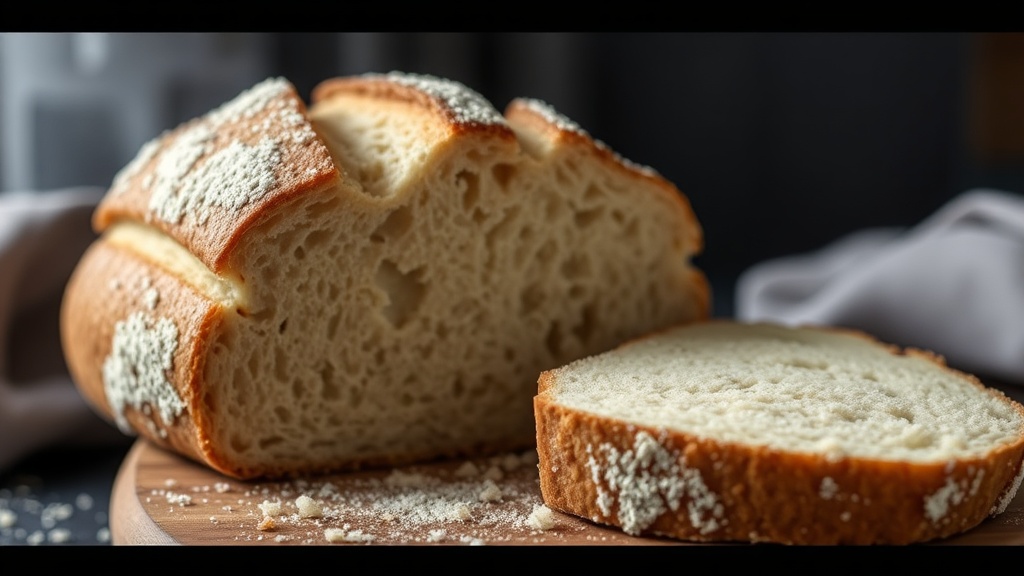
Why Your Homemade Sourdough Crumb Looks Dense and Tight

The Myth of the Perfect Loaf
Most home bakers assume that a dense, tight crumb is a sign of bad flour or a faulty starter. They blame the grain, the water, or even the temperature of their kitchen. While those factors play a part, the reality is often much simpler: you aren't managing fermentation or hydration with enough precision. A tight, heavy loaf isn't a failure of ingredients; it's a failure of timing and structural development. Understanding the mechanics of gas retention and gluten strength is what separates a gummy, dense loaf from one that has those beautiful, airy pockets people crave.
Sourdough isn't a set-it-and-forget-it process. It's a living system that requires constant adjustment. If your bread looks more like a brick than a cloud, you're likely dealing with one of three culprits: under-fermentation, over-proofing, or poor gluten development. You can have the highest quality organic flour from King Arthur Baking, but if your dough lacks the strength to hold onto the gases produced by your wild yeast, it will inevitably collapse under its own weight.
Why Is My Sourdough Bread So Dense?
The most common reason for a dense loaf is actually a lack of fermentation activity. If your starter hasn't reached its peak strength, or if you aren't waiting long enough during the bulk fermentation stage, the yeast simply hasn't produced enough carbon dioxide to lift the heavy dough. You might see bubbles on the surface, but those aren't enough to create a light interior. This is especially true if your kitchen is cool; fermentation slows down significantly when temperatures drop below 70 degrees Fahrenheit.
Another culprit is the "over-proofing" trap. This happens when the dough ferments for too long and the gluten structure begins to break down. When the gluten becomes too weak, it can no longer hold the gas bubbles, and the loaf collapses in the oven. You'll end up with a flat, dense loaf that has a gummy texture. It's a delicate balance—you want the dough to be bubbly and active, but not so far gone that it loses its structural integrity. Pay attention to the dough, not just the clock.
Managing Dough Strength and Tension
Building a strong dough structure is a physical process. You can't just mix flour and water and expect a masterpiece. You need to use techniques like stretch-and-folds or coil folds to build that strength. These movements organize the gluten strands, creating a network that acts like a series of tiny balloons. Without this network, the gas escapes, leaving you with a heavy loaf. If your dough feels slack or sticky throughout the process, you haven't built enough tension.
During the shaping stage, you're doing more than just making a ball of dough; you're creating surface tension. A well-shaped loaf should hold its shape on the counter without spreading out immediately. If it spreads, your tension wasn't high enough. This tension is what allows the loaf to expand upward in the oven (the oven spring) rather than spreading outward like a pancake. If you're struggling with this, look into the specific tension-building techniques used by professional bakers to ensure the loaf stays upright during the bake.
Can I Fix My Starter to Improve My Bread?
If your bread is consistently heavy, your starter might be the weak link. A weak starter produces less gas and lacks the enzymatic activity needed to lift the dough. A healthy, active starter should double or even triple in volume within a few hours of feeding. If your starter is sluggish, it won't provide the lift required for a light crumb. You might need to increase your feeding frequency or ensure you're using a consistent ratio of flour and water to keep the microbial population thriving.
Try feeding your starter with a higher percentage of whole grain flour, like rye or whole wheat, to provide more nutrients. This can jumpstart the fermentation process. Also, monitor the pH of your starter. A more acidic starter can sometimes weaken the gluten too much, while a starter that is too young won't have enough power. Finding that "sweet spot" of acidity and activity is a skill that comes with practice and observation.
How Do I Achieve Better Oven Spring?
Oven spring is that final burst of growth that happens in the first few minutes of baking. If your loaf comes out of the oven looking flat and dense, you're likely missing out on this critical stage. One of the biggest mistakes is not using enough heat or failing to create steam in the oven. Steam keeps the surface of the dough soft and elastic, allowing it to expand before the crust hardens. Without steam, the crust sets too quickly, trapping the dough and preventing it from rising.
- Use a Dutch Oven: This is the easiest way to trap steam. The lid keeps the moisture from the dough trapped inside the pot, creating a mini-steam chamber.
- Check Your Temperature: Ensure your oven and your Dutch oven are thoroughly preheated. A cold pot will result in a lackluster rise.
- Watch the Scoring: The way you cut the dough can also affect the rise. A shallow score might restrict growth, while a deep score might cause the loaf to deflate.
Ultimately, sourdough is a conversation between you and the dough. You have to learn to read the signs—the way it smells, the way it feels, and how it reacts to touch. It's not just about following a recipe; it's about understanding the biological and physical processes happening in your bowl. Once you master the relationship between fermentation, strength, and heat, you'll stop making bricks and start making bread.