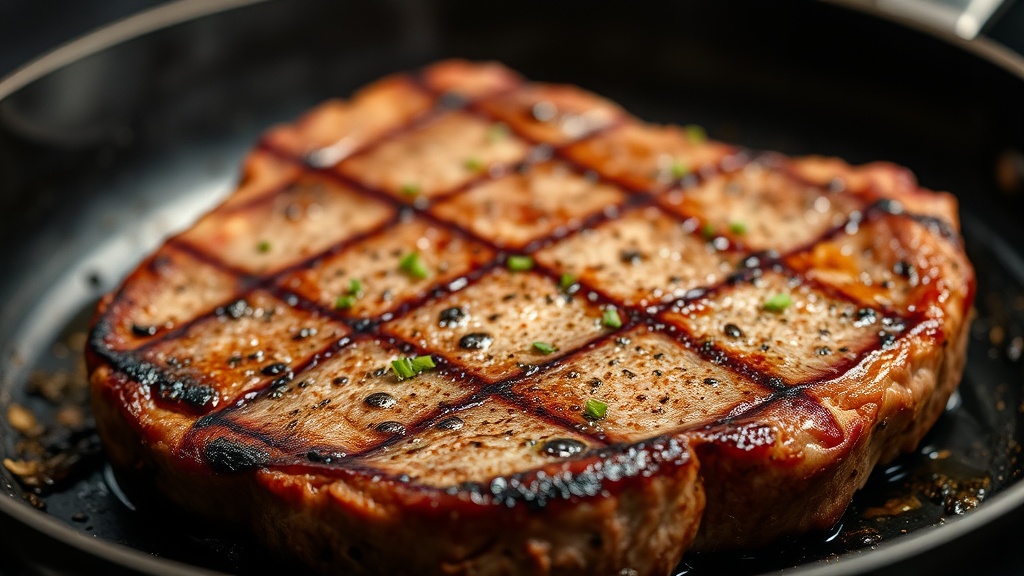
Why Your Pan-Seared Steak Is Gray and Steamed Instead of Crusty

You drop a thick ribeye into a ripping hot cast iron skillet, expecting that satisfying, aggressive sizzle. Instead, you hear a dull hiss, and within minutes, a pool of gray liquid begins to bubble around the meat. The steak looks boiled, the texture is chewy, and that coveted brown crust—the one that carries all the flavor—is nowhere to be found. This isn't bad luck; it's a fundamental misunder way you're managing moisture and heat. Understanding how to achieve a deep, caramelized crust is the difference between a mediocre home meal and a steakhouse-quality experience.
The science of a great sear relies on the Maillard reaction. This is the chemical reaction between amino acids and reducing sugars that gives browned food its distinctive flavor. If your steak is stuck in a pool of its own juices, you're actually boiling the meat in water rather than searing it in fat. To get that crust, you need to control three things: temperature, moisture, and surface area.
Why is my steak not getting a brown crust?
The most frequent culprit is moisture. If you take a steak straight from the refrigerator and throw it into a pan, the surface is covered in condensation. As soon as that cold, wet surface hits the hot metal, the heat is spent evaporating the water instead of browning the protein. You'll end up with a gray, limp exterior. Always pat your steak dry with paper towels—even the edges—before it ever touches the pan. If you have time, salt the steak and let it sit uncovered in the fridge for a few hours; this is a process called dry-brining, and it dries out the surface skin remarkably well.
Another reason is your pan temperature. If your pan isn't hot enough, the steak will leach out juices immediately, and the temperature will drop too low to recover. You want the oil to just start smoking—not actually catch fire—before the meat goes in. A heavy cast iron skillet is the gold standard here because it holds heat much better than thin stainless steel or non-stick pans. If your pan can't maintain its temperature when the meat hits it, you aren't ready to sear.
What oil should I use for high-heat searing?
Using the wrong fat can ruin your steak and your kitchen's air quality. Butter has a very low smoke point (around 350°F), meaning it will burn, turn bitter, and smoke excessively if used for the initial sear. For the high-heat phase, look for oils with high smoke points like avocado oil or grapeseed oil. These fats can handle the intense heat required for the Maillard reaction without breaking down into acrid-smelling smoke.
However, don't skip the butter entirely. The pro move is the "butter basting" method. Once you've achieved a solid crust with your high-heat oil, turn the heat down slightly and add a knob of butter, some garlic cloves, and fresh herbs like thyme or rosemary. As the butter foams, spoon that flavored fat over the steak continuously. This adds a layer of richness and aromatics that oil alone simply can't provide.
| Oil Type | Smoke Point | Best Use |
|---|---|---|
| Avocado Oil | ~520°F | Heavy searing and high-heat cooking |
| Grapeseed Oil | ~420°F | General pan-frying and searing |
| Unsalted Butter | ~350°F | Finishing and basting for flavor |
How do I know when the steak is done?
Relying on a timer or "feel" is a recipe for disappointment. By the time a steak feels firm to the touch, it might already be overcooked. An instant-read thermometer is your best friend. For a medium-rare steak, you want to pull the meat off the heat when it hits about 125°F to 130°F (52°C to 54°C) internal temperature. The temperature will continue to rise during the resting period due to residual heat—this is called "carryover cooking."
If you want to dive deeper into the mechanics of heat transfer, the Exploratorium's guides on food science offer fantastic insights into how heat moves through protein. And if you're looking for more precision-based cooking methods, checking out the resources at Serious Eats can help you understand the nuances of temperature control.
Finally, never, ever skip the rest. If you cut into that steak the second it leaves the pan, all those delicious juices will run out onto your cutting board, leaving the meat dry and lackluster. Let the steak rest on a warm plate or a wooden board for at least 5 to 10 minutes. This allows the muscle fibers to relax and reabsorb the juices, ensuring every bite is succulent and flavorful.