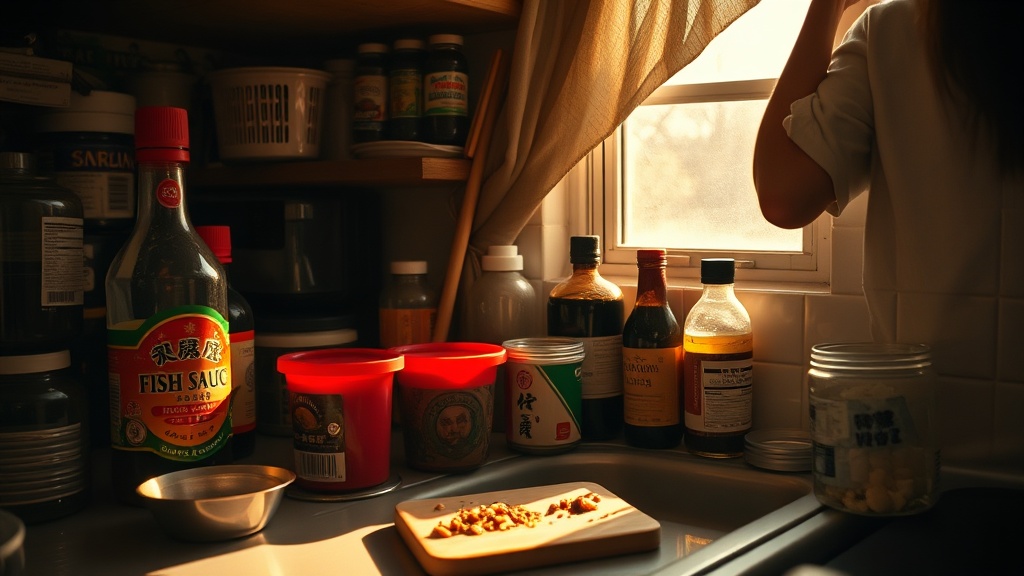
Condiment Economics: The /bin/bash.03 Flavor Bombs Saving My Queens Grocery Budget

Inflation has turned grocery shopping into a trust exercise, and I trust very little.
I especially don't trust tiny jars labeled "artisan" that cost as much as my weekly cilantro budget.
So I did what I always do when marketing gets loud: I ran the numbers.
The Only Metric That Matters in a 400-Square-Foot Kitchen
In a small kitchen, every ingredient pays rent. If it takes up shelf space, it needs to show up in multiple meals, fast.
My working metric is simple:
Flavor-to-cost ratio = (flavor impact per use) / (cost per use)
"Flavor impact" is subjective, yes. Cost per use isn't.
Cost per use = price / number of realistic uses
Method (So You Can Audit Me)
Price examples below are from a March 7, 2026 snapshot of online carts/search listings in my area (Queens, NY, ZIP 11372). Prices are volatile by location, promo cycle, and seller, so treat these as illustrative examples, not universal constants.
Quick Math: Why "Expensive" Condiments Often Win
A bottle can look expensive at checkout and still be your cheapest ingredient in the dish.
Example 1: Fish sauce beats finishing salt economics
- Observed listing snapshot: fish sauce, 25 fl oz,
$3.99 - 1 teaspoon per use gives about
150uses - Cost per use: about
$0.03
Even at 1 tablespoon, that's roughly $0.08 for serious umami.
Example 2: Gochujang is not pricey, it's prepaid flavor
- Observed listing snapshot: gochujang, 2.2 lb (1 kg),
$8.99 - At ~1 tablespoon (about 20 g) per dish: around
50uses - Cost per use: about
$0.18
That is stew base, noodle sauce, swicy sauce base, marinade, and emergency personality when your fridge is down to one carrot and a dream.
Example 3: Sesame oil is a micro-dose ingredient
- Observed listing snapshot: toasted sesame oil, 10.82 fl oz (320 ml),
$6.99 - At 1 teaspoon finishing use: about
65uses - Cost per use: about
$0.11
The whole point of toasted sesame oil is restraint. It is perfume, not bathwater.
The Ethnic Grocery Advantage, in Plain Dollars
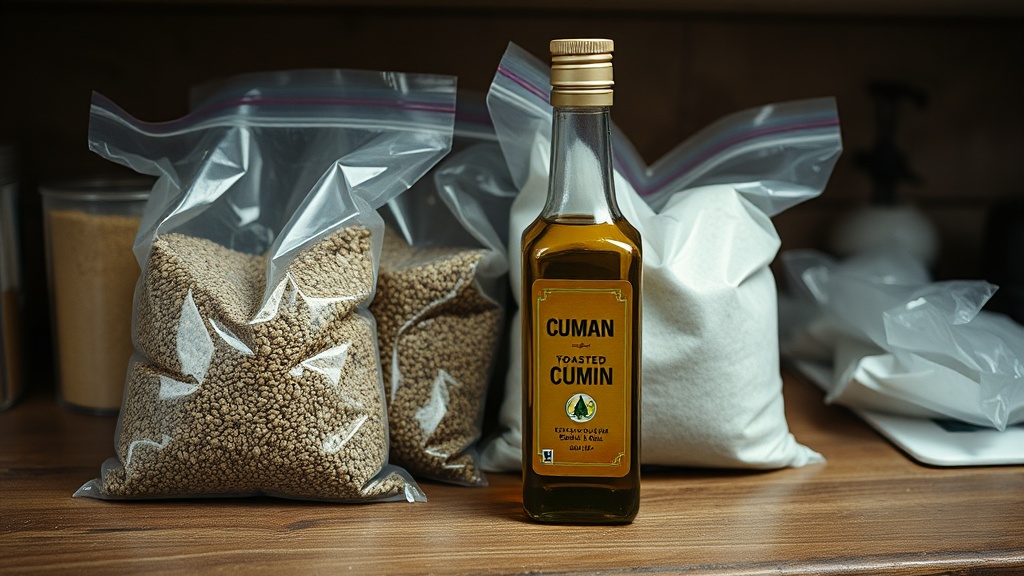
Here is where Patel Brothers and H-Mart-style shopping usually wins: package logic and category pricing, not fancy branding.
Spices
- Example snapshot: cumin seeds at
$3.99 - Comparable mainstream jars are often much smaller and materially higher per ounce
- If you cook cumin-heavy food weekly, bulk whole seed usually wins on unit price
Oils
- Example snapshot: sesame oil at
$5.99(16 oz class) - Mainstream sesame oils frequently price higher per fluid ounce, depending on brand and bottle size
No, this does not mean every mainstream bottle is bad. It means default shopping patterns are often upside-down for global home cooks.
Shelf Life Is a Budget Metric, Not a Food Safety Footnote
If you have a tiny fridge, longevity is cash flow.
Fresh herbs can die in 4 days and take your money with them. Shelf-stable condiments let you buy flavor once and distribute it over weeks.
My practical shelf-life framework (qualified by label/manufacturer guidance):
- Fish sauce: generally long-lived; quality changes slowly when capped and stored cool/dark
- Soy sauce: stable pantry item unopened; quality keeps well after opening with proper storage
- Gochujang: many labels instruct refrigeration after opening; flavor stays usable for months
- Black vinegar: typically shelf-stable; store sealed and cool
- Toasted sesame oil: oxidizes faster than fermented condiments, so buy the size you can finish
That is why I treat shelf life as part of ROI:
Real ROI = cost per use x spoilage risk
A $2 bunch of herbs you trash half of is not cheaper than a $6 bottle you actually finish.
My Top 5 High-ROI Global Condiments for a Tiny Apartment Kitchen
If your kitchen is basically a hallway with a stove, start here.
Fish sauce
Typical cost-per-use in my snapshot: about$0.03to$0.08
Soy sauce (regular or less sodium)
Typical cost-per-use: about $0.08 (1 tbsp from a 1 L bottle)
Chinese black vinegar (Chinkiang)
Typical cost-per-use: about $0.09
Gochujang
Typical cost-per-use: about $0.18
Toasted sesame oil
Typical cost-per-use: about $0.11
The Point
You do not need more ingredients. You need better economics.
USDA's Food Price Outlook has food-at-home inflation in the low single digits for 2026 (around 2.5% at publication). In that environment, single-use upgrades are mostly checkout theater. High-ROI condiments are strategy.
If I have to choose between a $15 finishing salt and a $6 bottle that improves 60+ dinners, I am picking the bottle.
Small kitchen rule: buy condiments that do multiple jobs, survive neglect, and make Tuesday food taste intentional.
That is not just cooking. That is urban budget design.
Sources (retrieved March 8, 2026)
- USDA ERS, Food Price Outlook: https://www.ers.usda.gov/data-products/food-price-outlook/
- Patel Brothers search/catalog reference (cumin and pantry items): https://www.patelbros.com/search?type=product&q=cumin
- H Mart Delivery search/catalog reference (fish sauce/gochujang/sesame oil categories): https://www.hmartdelivery.com/search?q=fish%20sauce
- Red Boat FAQ (fish sauce storage/use guidance): https://redboatfishsauce.com/pages/faqs
- Kikkoman FAQ hub (soy sauce storage guidance): https://www.kikkoman.com/en/cookbook/faq/
Note: Retail links are included for transparency and reproducibility, but exact prices can shift daily by store, ZIP code, and promo timing.