Tadka Is the 30-Second Technique That Will Rewire How You Think About Spices

The first time I watched my neighbor Priya temper spices, I thought the oil had caught fire.
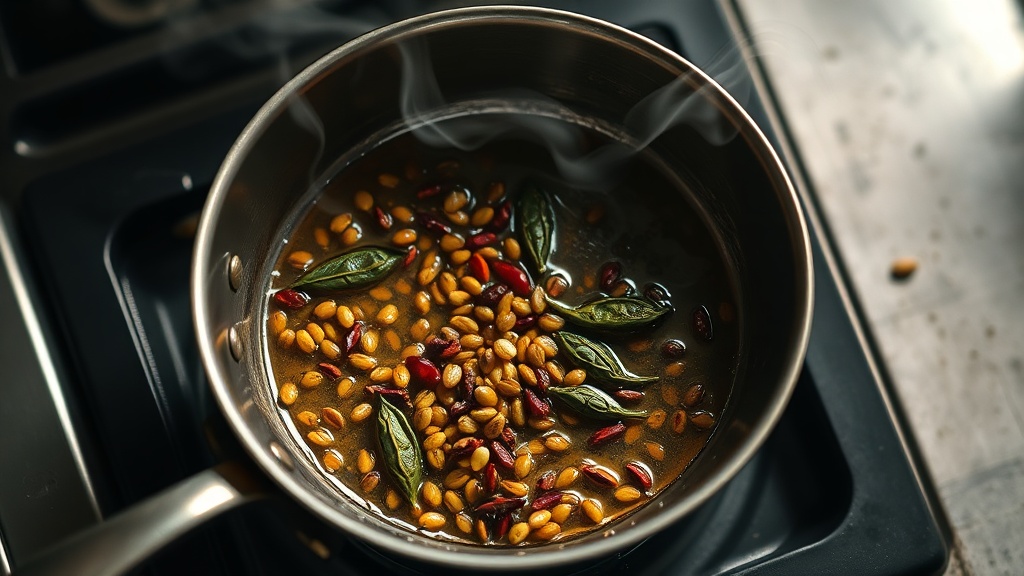
Mustard seeds detonating off the rim of a tiny steel pan. Curry leaves hitting fat and turning the air into something that grabbed you by the throat. A dried red chili going from maroon to almost-black in under three seconds.
She dumped the whole thing—oil, smoke, shrapnel—into a pot of cooked dal, and the dal changed. Not subtly. Fundamentally. Like someone had flipped a switch from "lentil soup" to "this is dinner."
That was eleven years ago. I've been chasing that moment in my own kitchen ever since, and I've learned that tadka—also called tarka, chaunk, phodni, or baghaar depending on who taught you—is the single most underappreciated technique in the global cooking repertoire.
What Tadka Actually Is (and Isn't)
Tadka is not "toasting spices." Toasting is dry heat. Tadka is blooming aromatics in hot fat, then using that flavored fat as a finishing or foundational layer in a dish.
The distinction matters because fat is a solvent. Many of the flavor compounds in whole spices—particularly the terpenes and phenols—are fat-soluble, not water-soluble. When you drop cumin seeds into 350°F oil, you're extracting compounds that boiling water literally cannot reach. The oil becomes the delivery vehicle, and when you pour it over dal or rice or yogurt, those compounds disperse across the entire dish in a way that ground spices stirred into liquid never achieve.
This is not mysticism. This is solubility chemistry that any food scientist will confirm over a beer.
The Physics of the Pop
Mustard seeds pop because they contain moisture trapped inside a hard seed coat. When that moisture hits its boiling point in hot oil, it turns to steam and the seed ruptures. The pop is your thermometer. If seeds aren't popping, your oil isn't hot enough. If they're burning before they pop, your oil is too hot or your pan is too thin and creating hot spots.
This is why I'm militant about using a small, heavy-bottomed pan. A thin aluminum tadka pan from the dollar store will scorch cumin in one spot while leaving seeds on the edges barely warm. My weapon of choice: a 6-inch stainless steel butter warmer I bought at a restaurant supply store on Bowery for $8. Heavy base, small surface area, tall sides to contain the inevitable splatter.
The Order of Operations
Tadka has a grammar. You can't just dump everything in at once, because different spices have different cook times and different flash points. Here's the sequence I use for a South Indian-style dal tadka, and the reasoning behind each step:
1. Fat first, always
I use ghee for dal, coconut oil for South Indian dishes, and mustard oil (heated past its smoke point first, then cooled slightly) for Bengali preparations. The fat choice isn't decorative—it's regional flavor architecture. Heat it until it shimmers but doesn't smoke.
2. Mustard seeds
These go in first because they need the highest sustained heat and they tell you when the oil is ready. Cover the pan loosely—those seeds will jump. Wait for the popping to slow to one pop per second.
3. Cumin seeds
Right after mustard seeds settle. Cumin is more delicate; it goes from fragrant to bitter in about eight seconds at high heat. You want them sizzling and darkening one shade, not two.
4. Dried red chilies (broken in half)
Breaking them exposes the seeds and inner membrane to the oil. They should darken but not blacken. If your chili turns fully black, it will taste acrid. Pull the pan off heat if they're moving too fast.
5. Curry leaves
Stand back. Curry leaves contain water, and water in 350°F oil is a splatter event. They should crackle aggressively and turn translucent within five seconds. If they're just sitting there limply, your oil temperature has dropped too far—common mistake when people add too many ingredients too fast.
6. Asafoetida (hing)
A pinch, off heat or at reduced heat. Hing burns almost instantly and goes from savory-funky to genuinely unpleasant. I add it as the last dry ingredient, stir once, and immediately pour the tadka into the dal.
7. The pour
Do not wait. Do not let the tadka "cool a bit." The sizzle when hot oil hits the dal is not just theater—it's a final burst of heat that blooms any residual aromatics in the lentils themselves. Pour it in, cover the pot for thirty seconds to trap the steam, then stir.
The Mistakes I Made So You Don't Have To
Crowding the pan. Tadka is not a stir-fry. You're working with tablespoons of oil, not cups. If you can't see the bottom of the pan between the spices, you've added too much. The spices need direct contact with hot fat, not with each other.
Using pre-ground spices. Ground cumin in hot oil doesn't bloom—it burns. Tadka is a whole-spice technique. If a recipe calls for ground spices in a tadka, the recipe is wrong, or it means add the ground spices off heat at the very end as a residual-heat steep.
Cold curry leaves. If your curry leaves come from the freezer (which is how you should store them, by the way—they freeze beautifully), let them sit on the counter for ten minutes first. Frozen leaves in hot oil is a grease-splatter incident report waiting to happen.
Same oil temperature for everything. A Punjabi tadka with just cumin and dried chili needs screaming hot oil. A South Indian tadka with urad dal and chana dal needs more moderate heat because those lentils need 20-30 seconds to turn golden without burning. Adjust your heat to your ingredient list.
Beyond Dal: Where Tadka Goes
Once you internalize tadka as "flavored fat as a finishing technique," it stops being an Indian cooking trick and starts being a universal tool.
I pour cumin-and-garlic tadka over roasted sweet potatoes. I finish a simple chicken soup with a chili-curry leaf tadka that turns it into something my Lebanese bakery mentor would call "serious." A friend who cooks primarily Mexican food started finishing her black beans with a tadka of cumin, oregano, and dried guajillo—she says she can't go back.
Yogurt with tadka (essentially the backbone of many South Indian pachadi dishes) is one of the fastest, most satisfying sides I know. Plain yogurt, salt, a tadka of mustard seeds, curry leaves, and a single dried red chili. Five minutes, and you have something that makes grilled anything better.
The Equipment Question
You do not need a dedicated tadka pan. I used a small saucepan for years. What you need:
- Small vessel, heavy base. Small because you're working with 2-3 tablespoons of fat. Heavy because thermal mass prevents the temperature crashes that lead to uneven cooking.
- A lid or splatter screen. Mustard seeds and curry leaves will make a mess. I keep a small pot lid nearby and cover loosely during the mustard seed phase.
- A kitchen scale if you're learning. Weighing 1 teaspoon of mustard seeds (about 3g) means you get consistent results while building instinct. Once you've done it fifty times, eyeball away.
A dedicated tadka pan—the small steel ones with a long handle—costs around $5-8 at any Indian grocery store and makes the pour easier because of the handle angle. Worth it if you're doing this weekly, which you should be.
The Real Point
Tadka is a 30-second technique that takes years to internalize, and that's the kind of cooking I respect most. It's not a recipe. It's a principle: hot fat extracts flavor from whole spices in ways that no other method replicates. Every cuisine that uses whole spices knows some version of this—Sichuan cooks bloom dried chilies and Sichuan peppercorns in oil, Ethiopian cooks make niter kibbeh by infusing butter with spices over low heat, even Italian soffritto is blooming aromatics in fat before building a sauce.
But nobody does it with the speed, precision, and drama of a good tadka. Thirty seconds of controlled violence in a tiny pan, and your entire dish changes register.
That's what Priya showed me eleven years ago. The dal was fine before the tadka. After it, the dal was hers.