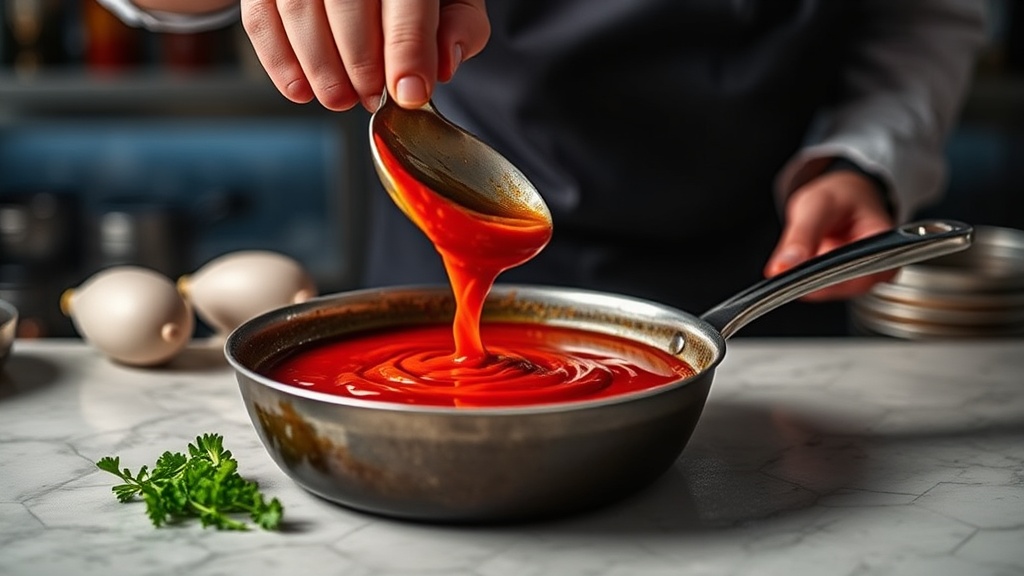
The Secret to Better Pan Sauces

Quick Tip
Always use a liquid like stock, wine, or water to lift the 'fond' from your pan for instant flavor.
Most home cooks throw away a goldmine of flavor every single time they deglaze a pan. That brown, crusty residue stuck to the bottom of your skillet—known in the culinary world as fond—is actually the foundation of a professional-grade sauce. This post explains how to capture that essence to transform a thin, watery liquid into a silky, restaurant-quality pan sauce.
What Is Fond and Why Does It Matter?
Fond is the collection of caramelized proteins and sugars that stick to the bottom of a pan after searing meat or vegetables. It's the concentrated soul of your dish. When you add a liquid to the hot pan, those bits dissolve and create a deep, savory base that you just can't get from a jar of pre-made sauce. If you're already achieving the perfect sizzle with cast iron, you've likely already created a beautiful layer of fond without even realizing it.
The chemical reaction responsible for this is called the Maillard reaction. It isn't just about browning; it's about building complex flavor profiles through heat and protein interaction.
How Do You Make a Pan Sauce?
To make a pan sauce, you deglaze the pan with a liquid, simmer it to reduce, and whisk in a cold fat.
Follow these steps to ensure your sauce doesn't break or turn into a greasy mess:
- Deglaze: After removing your protein, pour in a liquid like dry white wine, chicken stock, or even a splash of Vermouth. Use a wooden spoon to scrape every single bit of the brown bits off the bottom.
- Reduce: Let the liquid simmer until it has reduced by about half. This concentrates the flavor.
- Mount with Fat: Turn the heat to low and whisk in a knob of cold, unsalted butter (I personally love using Kerrygold) or a splash of heavy cream. This creates an emulsion.
- Season: Taste it first. You'll likely need a pinch of salt or a squeeze of lemon juice to brighten the heavy fats.
The trick is the temperature. If the liquid is boiling too violently when you add the butter, the sauce might break (meaning the fat separates from the liquid). It's a common mistake, but easily fixed if you keep the heat low during the final stage.
Which Liquids Work Best for Deglazing?
The best liquid depends entirely on what you cooked in the pan initially.
| Protein Cooked | Best Deglazing Liquid | Flavor Profile |
|---|---|---|
| Chicken or Veal | Dry White Wine | Bright, acidic, and light |
| Beef or Steak | Red Wine or Beef Stock | Deep, rich, and heavy |
| Shrimp or Scallops | Lemon Juice & White Wine | Zesty and refreshing |
| Mushrooms/Vegetables | Sherry or Vegetable Stock | Earthy and savory |
One thing to watch out for: don't use a pan that is too hot when you pour the liquid in. The steam can rise up quite aggressively (watch your hands!) and it can actually scorch the delicate bits of fond if the pan is smoking-hot. Wait a minute or two after removing the meat before you start the process.