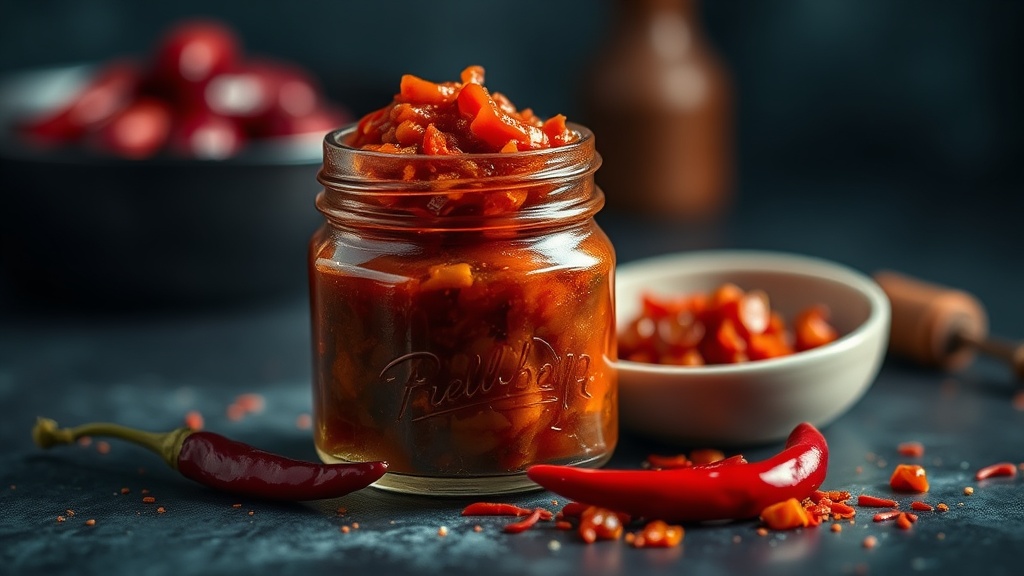
Understanding the Deep Profile of Fermented Chili Paste

Imagine you’re making a simple bowl of noodles, but the sauce lacks that specific, funky depth that makes a dish feel complete. You add a spoonful of a standard hot sauce, but it only provides heat without any real character. This post explains the complex chemistry of fermented chili pastes—like Gochujang or Doubanjiang—and how their biological processes create flavor profiles that heat alone can't achieve. We'll look at how salt, microbes, and time work together to transform raw peppers into something much more complex.
What is the difference between hot sauce and fermented chili paste?
The primary difference lies in the presence of active fermentation and the resulting depth of flavor. While many hot sauces are essentially vinegar-based liquids meant for immediate heat delivery, fermented chili pastes are thick, textured condiments developed through long-term microbial activity. A sauce like Tabasco relies on acidity to provide a sharp bite, but a paste like Gochujang relies on the breakdown of starches and proteins to create a savory, "umami" sensation.
When you eat a standard hot sauce, you're mostly tasting capsaicin and vinegar. When you eat a fermented paste, you're tasting the byproduct of bacteria and yeast eating sugars and starches. It’s a much slower, more nuanced process. It's not just about the sting on your tongue; it's about the lingering, savory weight the paste leaves behind.
Think of it like the difference between a squeeze of lemon and a wedge of aged blue cheese. One is a sharp, bright accent. The other is a complex, living thing. Most commercial hot sauces are "shelf-stable" through high acidity, whereas fermented pastes gain their stability through salt and the work of Lactobacillus bacteria.
This distinction matters for your cooking because if a recipe calls for a fermented paste and you swap in a liquid hot sauce, you'll lose the body of the dish. The sauce will become thin and one-dimensional. You won't get that thick, coating mouthfeel that makes a dish feel substantial.
How does the fermentation process create flavor?
Fermentation creates flavor by breaking down complex organic molecules into simpler, more intense ones through microbial action. During this process, bacteria and yeast consume the sugars found in the peppers and any added starches, producing acids, alcohols, and esters in the process. This chemical breakdown is what moves the flavor profile from "just spicy" to "savory, salty, and slightly sweet."
There are three main components at play here:
- Lactic Acid: This provides a soft, rounded acidity rather than the sharp, stinging acidity of vinegar. It creates a "tang" that feels integrated into the paste.
- Amino Acids: As proteins break down, they create umami. This is why fermented pastes often taste "meaty" or savory even without meat.
- Complexity: The interplay of various microbes creates a spectrum of flavors—some notes might be slightly fruity, while others are deeply earthy or even slightly funk-forward.
It's a delicate balance. If the salt content is too low, the wrong bacteria might take over, leading to spoilage. If the salt is too high, the fermentation might stall entirely. This is why many traditional recipes, such as those found in FAO food standards documentation, emphasize precise salt-to-weight ratios. You aren't just making a condiment; you're managing a tiny ecosystem.
If you've ever wondered why high-quality ingredients matter so much in these processes, it's because the quality of your starting material dictates the final outcome. For example, if your salt is impure, it can introduce unwanted mineral notes that disrupt the fermentation. It's a lot like how certain sea salts can taste metallic if they aren't processed correctly. In fermentation, every additive counts.
The Roles of Salt, Sugar, and Heat
To understand the profile, you have to understand the ingredients. Most fermented pastes use a combination of three pillars to achieve their specific texture and taste.
| Ingredient | Primary Function | Impact on Flavor Profile |
|---|---|---|
| Chili Peppers | Heat & Base | Provides the capsaicin and the foundational color/texture. |
| Salt | Preservation | Regulates microbial growth and draws out moisture. |
| Starches (Rice/Soy/Wheat) | Fuel | Provides the food for microbes to turn into umami. |
Without the starch, you'd just have a spicy mash. The starch is the "fuel" that allows the fermentation to actually happen. It's the reason why a paste like Gochujang has that slightly sweet, thick consistency. It’s not just sugar added to the pot; it's the result of the starch being processed by enzymes.
Which fermented chili pastes should you use for different cuisines?
You should choose a paste based on the specific flavor profile—sweet, salty, or funky—that your dish requires. Not all fermented pastes are created equal, and using the wrong one can throw off the entire balance of your meal. For example, a bright, vinegar-heavy sauce won't work in a recipe designed for the deep, fermented funk of a traditional Asian paste.
Here is a quick guide to the most common varieties you'll encounter in a professional kitchen or a well-stocked pantry:
- Gochujang (Korea): This is a thick, fermented paste made from chili powder, glutinous rice, fermented soybeans, and salt. It is notably sweet and savory with a medium heat level. It's perfect for adding body to stews or as a base for marinades.
- Doubanjiang (China): Often called "Pixian Doubanjiang," this is a much more aggressive, salty, and funky paste. It uses fermented broad beans and is the backbone of Sichuan cuisine. Use this when you want a deep, savory punch that isn't necessarily "sweet."
- Sambal Oelek (Indonesia/Malaysia): While often seen as a fresh paste, many versions undergo a brief fermentation. It is much more focused on the pure, bright heat of the chili and is less about the heavy, fermented umami of the Korean or Chinese versions.
- Harissa (North Africa): This is a spice-heavy paste that often includes roasted peppers, garlic, and caraway. While it can be fermented, it's often more about the infusion of aromatics and oils. It provides a bright, aromatic heat.
When you're cooking, don't just look at the heat level on the label. Look at the texture. If you're making a dish that needs a thick, coating element—like a braise or a hearty sauce—reach for the Gochujang or the Douban-style pastes. If you want a quick, sharp hit of heat to brighten a dish, a more liquid-based sambal might be your best bet.
One thing to watch out for is the "salt creep." Because these pastes are fermented, their flavor can continue to evolve even after you've opened the jar. Always taste a small amount first. If the paste tastes overwhelmingly salty or has a "sharp" fermented edge, you'll want to balance it with a bit of sweetness or acidity in your cooking. It's a common trick to use a tiny bit of honey or even a splash of rice vinegar to round out those edges.
A lot of people over-rely on salt when a dish feels "flat." In reality, the dish probably just lacks the complexity of a fermented ingredient. If your sauce feels one-dimensional, it's likely because you've only used heat (the pepper) and not the fermented depth (the starch and microbes). Adding a spoonful of a fermented paste can fix that instantly. It's a much more effective way to build layers than just adding more salt or more hot sauce.
If you're already working with various aromatics and want to make sure you're using them to their full potential, you might enjoy reading about how to maximize your herb stems. Much like fermented pastes, the "waste" or the "base" parts of ingredients often hold the most concentrated flavor.