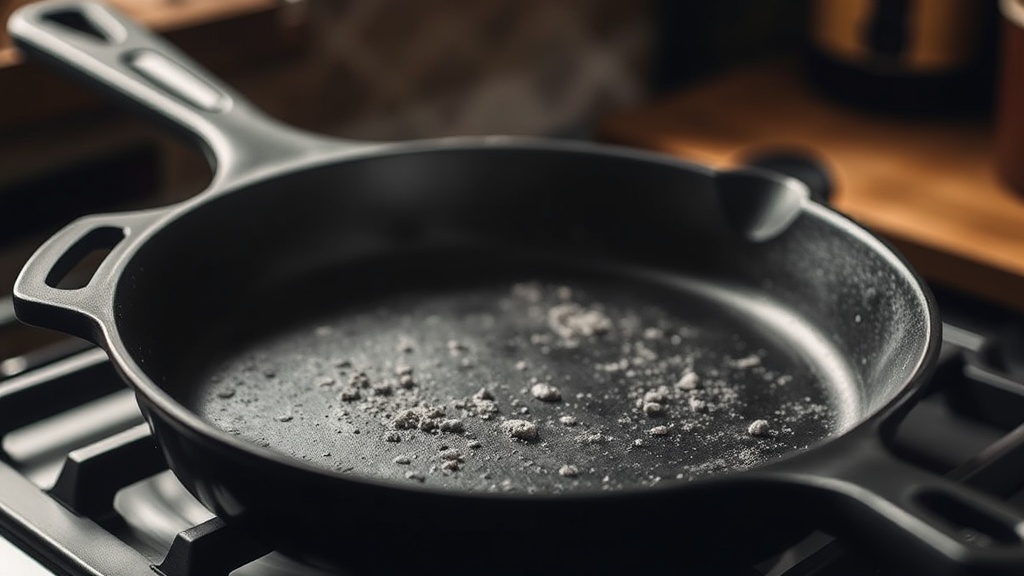
Why Your Cast Iron Skillet Is Sticking

You are using too much oil
Your pan isn't hot enough before adding food
You are using too much water during cleaning
The seasoning has been stripped away
You are cooking acidic foods too often
Most home cooks believe that a sticking cast iron skillet is a sign of a "ruined" pan that needs to be tossed or re-seasoned from scratch. This is a misconception. A sticking pan is rarely a permanent defect; instead, it is usually a symptom of specific errors in temperature management, fat selection, or moisture control. Understanding these mechanical and chemical failures will save you from the frustration of scraping stuck proteins off a pan and help you maintain a functional, nonstick surface for decades.
This guide breaks down the five primary reasons your cast iron is failing you and provides the exact technical adjustments needed to fix the issue. Whether you are searing a ribeye or making a cornbread, these principles apply to every cook using heavy iron.
1. Improper Temperature Management
The most common reason food sticks to cast iron is that the pan was not hot enough before the food hit the surface. Many cooks follow the "water droplet test" and assume that because a drop of water skitters across the surface, the pan is ready. However, the Leidenfrost effect—where a droplet of water evaporates so rapidly it creates a cushion of steam—only proves the pan is hot, not that it has reached the specific temperature required for the Maillard reaction and protein release.
When you add food to a lukewarm pan, the proteins bond directly to the microscopic pores of the iron. This is particularly evident when cooking eggs or delicate fish. To avoid this, you must achieve a high enough temperature to create a physical barrier between the food and the metal. This is achieved through a process called "thermal release." When the pan is sufficiently hot, the proteins undergo a structural change that causes them to pull away from the metal naturally. If you try to flip a steak too early, you are fighting against physics.
How to fix it:
- The Pre-heat Duration: Do not rush the heating process. If you are using an electric stove or an induction cooktop, heat the pan on medium-low for at least 10 to 15 minutes before increasing the heat. Cast iron has high thermal mass but low thermal conductivity, meaning it takes a long time to distribute heat evenly.
- The Searing Test: Instead of just looking for water beads, wait until the oil reaches its "shimmering" point. If you are using an oil with a high smoke point, like avocado oil, wait until the oil looks thin and fluid, almost like water, before adding your protein.
- Wait for the Release: If you are searing a scallop or a piece of salmon and it feels stuck, do not force it. If it doesn't release easily with a spatula, the proteins have not finished contracting. Wait another 60 seconds; the pan's heat will eventually trigger the release.
2. Using the Wrong Type of Fat
The type of fat you use determines the longevity of your seasoning and the immediate nonstick performance of the pan. Many people reach for extra virgin olive oil or unsalted butter because they are pantry staples, but these are often the culprits behind a sticky mess. Extra virgin olive oil has a low smoke point (around 325°F to 375°F), and butter contains milk solids and water. When these hit a hot cast iron surface, the milk solids burn and create a tacky, carbonized residue that acts like glue for your food.
A successful cast iron surface relies on a thin layer of polymerized oil. Polymerization occurs when fats are heated to a certain point, causing them to bond into a hard, plastic-like film. If you use a fat that burns too quickly, you are essentially creating a layer of burnt debris rather than a smooth, nonstick coating. If you find your pans are frequently sticking, you may want to compare your experience to why your nonstick pan is losing its grip, as the degradation of the surface often stems from similar thermal mismanagement.
Recommended Fats for Cast Iron:
- Avocado Oil: With a smoke point of approximately 520°F, this is the gold standard for high-heat searing in cast iron. It provides a stable, non-reactive base.
- Grapeseed Oil: A professional favorite that has a high smoke point and a neutral flavor, ensuring it doesn't interfere with the taste of your food.
- Rendered Animal Fat: Using bacon grease or tallow is an excellent way to reinforce your seasoning. These fats are highly stable and contribute to a robust, seasoned surface.
- Clarified Butter (Ghee): If you want the flavor of butter without the sticking, use ghee. Because the milk solids and water have been removed, it can withstand much higher temperatures without burning.
3. Residual Moisture and Surface Contamination
Water and hot oil are enemies in the kitchen, but water and hot cast iron are even more problematic. If you add food that has been recently washed and not thoroughly dried, the moisture will instantly turn to steam. This steam can get trapped between the food and the pan, preventing the oil from coating the food and creating a "suction" effect that causes sticking. Furthermore, if you are cooking vegetables that have high water content—like mushrooms or zucchini—the released moisture can create a layer of liquid that prevents the food from searing, leading to a soggy, stuck mess.
Another issue is "surface buildup." This happens when microscopic bits of food or burnt oil from previous cooking sessions are not properly cleaned away. These tiny fragments create a rough surface. Instead of a smooth, polymerized layer, you have a jagged landscape that grabs onto your food. Even if you think the pan is clean, a build-up of carbonized organic matter will cause sticking.
Prevention Tactics:
- The Paper Towel Method: Always pat your proteins (steaks, chicken, fish) completely dry with a paper towel before they touch the pan. Even a slight dampness will ruin the sear.
- Avoid Overcrowding: When you crowd a cast iron skillet with too many ingredients, the temperature of the pan drops instantly. This causes the moisture from the food to pool in the pan, effectively boiling the food in its own juices rather than searing it.
- Scrubbing the Residue: Use a chainmail scrubber or a stiff brush with hot water to ensure no carbonized bits remain from your last meal. A clean surface is a nonstick surface.
4. Neglecting the Seasoning Maintenance
Seasoning is not a one-time event; it is a continuous process of building up layers of polymerized oil. If you have been using your skillet primarily for low-heat tasks or if you have been stripping the seasoning too aggressively with harsh soaps, your pan will lose its "slip." A well-seasoned pan should feel slightly tacky to the touch when cold, but smooth and slick when heated with oil.
If you have been using a lot of acidic ingredients—like tomato sauce or vinegar-based reductions—directly in the pan without a protective layer of fat, the acid can eat away at the seasoning. This creates microscopic pits in the iron, which increases the surface area for food to stick to. While a little acidity is fine for a seasoned pan, constant exposure to high-acid foods without a fat buffer will degrade the surface.
How to Rebuild Your Seasoning:
- The Deep Clean: Wash the pan with warm water and a small amount of mild dish soap to remove any loose carbon.
- Dry Thoroughly: Place the pan on a stovetop burner over low heat for a few minutes to ensure every drop of moisture has evaporated.
- The Oil Application: Apply a very thin layer of flaxseed oil or grapeseed oil to the entire surface, including the sides and the handle.
- The Wipe-Down: This is the most important step. Use a clean paper towel to wipe off almost all the oil. You want a microscopic film, not a greasy layer. If you leave too much oil, you will end up with a sticky, gummy mess rather than a hard seasoning.
- The Bake: Place the pan upside down in a 450°F oven for one hour, then let it cool in the oven. Repeat this process 2-3 times if the pan feels particularly rough.
5. Improper Heat Distribution (The Induction/Electric Factor)
If you have recently switched from gas to induction or electric cooktops, you may notice your cast iron is sticking more frequently. Gas flames provide a direct, localized heat that cast iron absorbs easily. Induction, however, uses magnetic fields to heat the metal, which can sometimes create "hot spots" or uneven heat distribution if the pan is not perfectly compatible with the cooktop. If the center of your pan is significantly hotter than the edges, the food in the center will sear, while the food toward the perimeter will stick and steam.
Furthermore, many modern electric cooktops have a "lag" in temperature. You might think the pan is at the right temperature, but the heating element is actually cycling on and off, causing the temperature to fluctuate. This prevents the steady, high heat required for the thermal release mentioned earlier.
Adjusting Your Technique:
- Pre-heat Slowly: On induction or electric, start on a low setting and gradually move up. This allows the heat to soak through the entire thickness of the iron, ensuring the edges are as hot as the center.
- Rotate the Food: Don't just leave the food in one spot. Periodically rotate your protein or vegetables to ensure they are making contact with the most consistent heat zones of the pan.
- Use a Heat Diffuser: If you find your electric stove creates extreme hot spots that burn your oil before the food is even in, a stainless steel heat diffuser can help spread the energy more evenly across the bottom of the skillet.