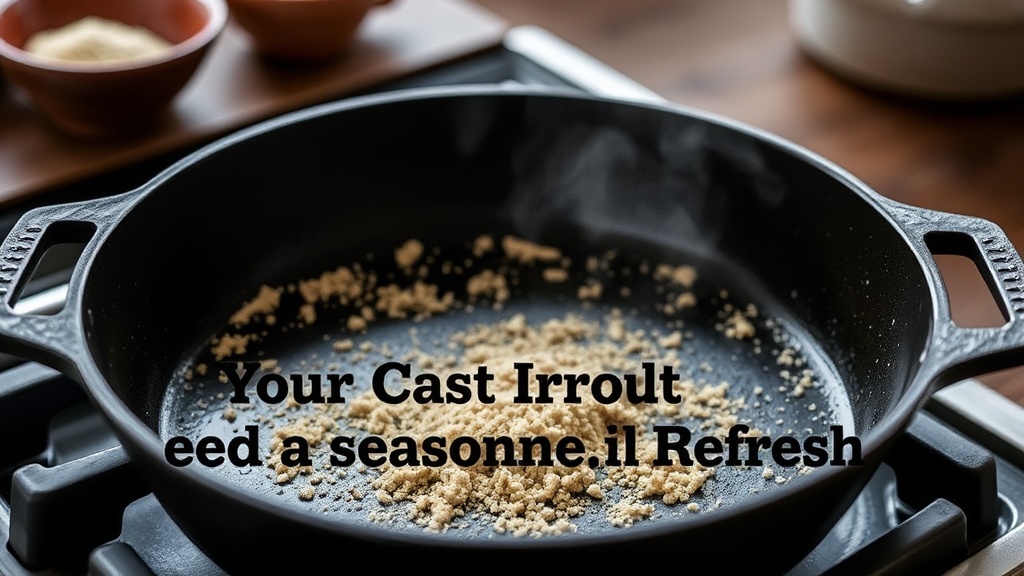
Why Your Cast Iron Skillet Needs a Seasoning Refresh

Signs of a Broken Seasoning Layer
The Importance of Polymerized Oil
Step-by-Step Restoration Method
Daily Maintenance for Longevity
Many home cooks believe that once a cast iron skillet has a black, non-stick surface, the work is done. This is a misconception. A seasoned skillet is not a static object; it is a living, breathing layer of polymerized oil that degrades every time you cook. If you notice food sticking to your pan, or if you see patches of dull gray or orange rust, your seasoning has failed. This guide explains why a seasoning refresh is a functional necessity for high-heat cooking and how to restore your pan to peak performance.
The signs that your seasoning is failing
You do not need to guess when it is time to re-season your cast iron. The pan will provide clear indicators through physical changes and cooking performance. Recognizing these signs early prevents permanent damage to the metal and ensures your food cooks as intended.
Food adhesion and sticking
The primary purpose of seasoning is to create a smooth, hydrophobic surface. If you are searing a ribeye steak or cooking delicate eggs and the food tears or clings to the metal, your polymer layer has thinned or become uneven. This often happens because the oil used in previous cooking sessions was not high enough in smoke point or was not heated sufficiently to bond with the iron. When the surface becomes "grabby," the microscopic pores of the iron are exposed, causing protein and sugars to bond directly to the metal rather than sliding over the oil layer.
Visible discoloration and rust
A healthy cast iron pan should have a consistent, deep black or dark brown sheen. If you see reddish-brown patches, that is oxidation (rust). Rust is a sign that moisture has penetrated the seasoning layer and reached the raw iron underneath. While a small amount of surface rust is not a death sentence, it indicates that your protective barrier is broken. Similarly, if the pan looks dull, gray, or "ashy," the seasoning has likely been stripped away by aggressive cleaning or acidic ingredients.
Texture irregularities
A well-seasoned pan should feel smooth to the touch. If your skillet feels gritty or has a bumpy, uneven texture, you may have "carbon buildup." This occurs when food particles or excess oil are heated but not fully polymerized, creating a charred, crusty layer that is technically part of the pan but is not a functional non-stick surface. This buildup can interfere with the science of the Maillard reaction by preventing even heat distribution across the contact points of your food.
Why seasoning matters for heat distribution
Seasoning is more than just a non-stick coating; it is a thermal management tool. A smooth, polymerized layer ensures that heat travels evenly from the burner to the food. When seasoning is uneven or cracked, you create "hot spots" and "cold spots." This leads to inconsistent cooking, where the edges of a pancake might burn while the center remains undercooked.
Furthermore, a robust seasoning layer protects the iron from the high-intensity heat required for professional-grade searing. Without a thick, stable layer of polymerized oil, the iron can react with acidic foods—like a tomato-based sauce or a splash of vinegar—causing the metal to leach a metallic taste into your dish. Maintaining your seasoning ensures that the flavors you intend to cook remain pure and untainted by the pan itself.
The step-by-step process for a seasoning refresh
When your pan shows the signs mentioned above, you must perform a full seasoning refresh. This is more intensive than a simple wipe-down with oil. Follow these steps to ensure a durable, professional-grade finish.
Step 1: Deep cleaning the surface
You must remove all carbonized food and old, degraded oil before applying new seasoning. Use hot water and a stiff brush to scrub the pan. If there is significant stuck-on debris, use a chainmail scrubber or a specialized cast iron cleaner. Avoid using heavy soaps that contain harsh degreasers if you intend to keep the seasoning intact, but do not be afraid to use a small amount of mild dish soap if you are performing a full strip-and-reseason. The goal is to reach the bare metal or at least a very clean, smooth surface.
Step 2: Drying and heating
Moisture is the enemy of cast iron. After washing, dry the pan thoroughly with a lint-free towel. To ensure every microscopic drop of water is evaporated, place the pan on a stovetop burner over low heat for 3 to 5 minutes. This "pre-heating" stage is critical. If you apply oil to a damp pan, you are essentially steaming the metal rather than allowing the oil to bond with it.
Step 3: Applying the oil
Choose an oil with a high smoke point. For a professional kitchen standard, I recommend Grapeseed oil, Avocado oil, or highly refined Flaxseed oil. Avoid extra virgin olive oil or butter, as their low smoke points will cause them to burn and become sticky rather than polymerizing.
Apply a very small amount of oil—about a teaspoon—to the warm pan. Use a paper towel to spread the oil over the entire surface, including the sides and the handle. Once it is spread, take a clean, dry paper towel and wipe the oil off. You want the pan to look like there is no oil left on it. If you leave a visible layer of oil, the pan will become tacky and develop a sticky residue rather than a hard, smooth finish.
Step 4: The baking process
Place your oven in the oven and preheat it to approximately 450°F (230°C). Place the pan upside down on the middle rack. This prevents oil from pooling in the bottom of the pan. Place a sheet of aluminum foil on the rack below the pan to catch any stray drips. Bake the pan for one hour. This high heat facilitates polymerization, where the oil molecules undergo a chemical reaction to become a hard, plastic-like coating.
Step 5: Repeat for depth
A single layer of seasoning is rarely enough for a deep, durable finish. For a truly professional result, allow the pan to cool inside the oven, then repeat the oiling and baking process two or three more times. Each layer adds a new level of protection and smoothness. This is the same method used to build the deep, dark patina on high-end cookware from brands like Lodge or Le Creuset.
Maintenance tips to prevent frequent seasoning
While you will eventually need to refresh your seasoning, regular maintenance can extend the life of your current layer. Incorporating these habits into your kitchen routine will keep your skillet in top condition.
- Avoid the dishwasher: This is the fastest way to strip seasoning and induce rust. Cast iron should always be hand-washed.
- Cook with fat: Regularly cooking with fats like bacon grease, lard, or high-smoke-point oils helps reinforce the seasoning layer through natural use.
- Control your acidity: While seasoned cast iron can handle some acid, avoid simmering highly acidic ingredients (like a heavy tomato sauce) for extended periods unless you have a very thick, well-established seasoning layer.
- Dry immediately: Never let your cast iron air-dry in a rack. Always dry it on the stovetop over low heat to ensure all moisture is gone before storing.
- The quick wipe: After every use, while the pan is still slightly warm, apply a microscopic drop of oil and buff it with a paper towel. This maintains the surface tension and prevents oxidation.
A well-maintained cast iron skillet is one of the most versatile tools in a chef's arsenal. By understanding the science of seasoning and committing to a regular maintenance schedule, you ensure that your pan remains a reliable, high-performance instrument for years to come.